






 Rumah
Rumah Produk
29+ years in pharmaceutical machinery, covering capsule filling, tablet pressing, blister packaging, tablet and capsule counting, cartoning, GMP production, and overseas machine service.

Bagaimana Mesin Blister Penggelek DPH-270Max Membantu Pengilang Mengurangkan Kos Pembungkusan Tahunan
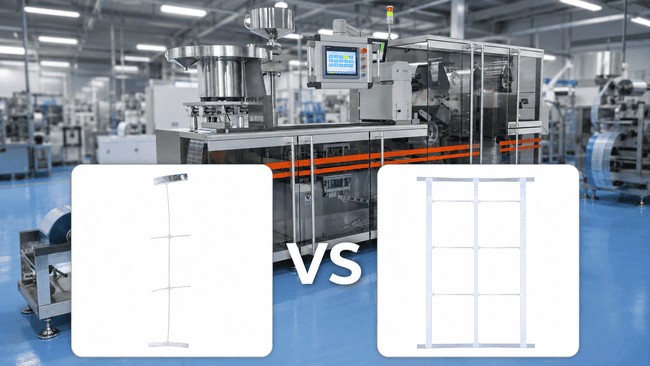
Apabila memilih mesin pembungkusan blister, kebanyakan pengilang memberi tumpuan kepada harga mesin, kelajuan pengeluaran dan tahap automasi.
Namun, terdapat satu lagi faktor yang secara langsung mempengaruhi kos pengeluaran jangka panjang anda — penggunaan bahan pembungkusan.
Bagi syarikat farmaseutikal, pengilang nutraseutikal dan pengilang kontrak, pembungkusan blister ialah proses berterusan. Setiap hari, beribu-ribu atau malah berjuta-juta pek blister dihasilkan, yang bermaksud walaupun perbezaan kecil dalam penggunaan bahan boleh mewujudkan jurang kos yang ketara dari masa ke masa.
Filem PVC dan kerajang aluminium mungkin kelihatan seperti bahagian kecil bagi setiap bungkusan. Tetapi apabila didarab dengan berjuta-juta pek setiap tahun, perbezaan kos terkumpul boleh menjadi faktor utama yang mempengaruhi keuntungan pengeluaran.
Inilah sebabnya memilih sebuah mesin pembungkusan blisterbukan hanya tentang membeli peralatan. Ia juga tentang memilih penyelesaian pengeluaran yang lebih cekap.
Dalam artikel ini, kami akan meneroka bagaimana teknologi blister penggelek meningkatkan penggunaan bahan dan mengurangkan kos pengeluaran jangka panjang, dengan perbandingan praktikal antara mesin blister penggelek RQ-DPH-270Max dan mesin blister plat rata DPP-270Max.
Ramai pengilang mungkin berpendapat bahawa penggunaan bahan pembungkusan bergantung terutamanya pada saiz produk dan reka bentuk rongga blister.
Namun, struktur mesin juga memainkan peranan penting.
Semasa pengeluaran pembungkusan blister, filem PVC dan kerajang aluminium perlu melalui pelbagai proses, termasuk pembentukan, pengedapan dan pemotongan. Susun atur setiap stesen secara langsung mempengaruhi kecekapan penggunaan bahan pembungkusan.
Perbezaan kecil dalam penggunaan bahan bagi setiap kad blister mungkin kelihatan tidak ketara. Tetapi dalam pengeluaran volum tinggi, berjuta-juta pek blister dihasilkan setiap tahun. Walaupun peningkatan yang kecil boleh membawa kepada penjimatan besar dalam kos pembungkusan.
Pelbagai jenis mesin pembungkusan blister menggunakan prinsip kerja yang berbeza.
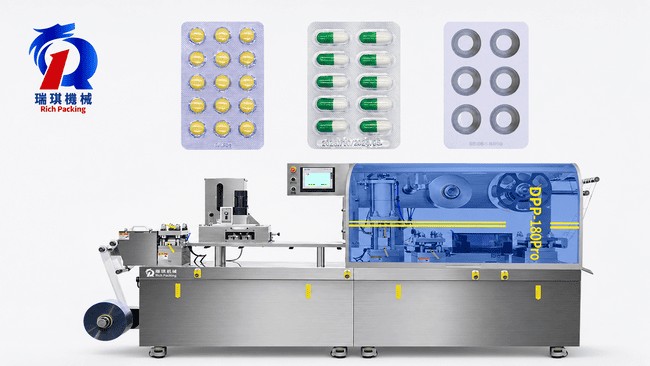
Mesin blister plat rata tradisional menggunakan proses kerja berselang-seli. Stesen pembentukan, pengedapan dan pemotongan bergerak langkah demi langkah, dan bahan diproses secara kelompok demi kelompok.
Dengan struktur plat rata, mesin ini menawarkan kebolehsuaian yang sangat baik untuk pelbagai aplikasi produk, termasuk tablet, kapsul, kapsul lembut, ampul, botol cecair oral, picagari dan pelbagai produk berbentuk tidak sekata.
Selain pembungkusan farmaseutikal tradisional, mesin blister plat rata juga boleh disesuaikan untuk produk dengan bentuk khas atau keperluan pengisian cecair, seperti paket kecil sos tomato, madu, sos, sampel kosmetik, kapsul minyak wangi dan produk cecair dos tunggal lain.
Mesin ini boleh menyokong pelbagai struktur pembungkusan, termasuk pek blister PVC/Alu, pek pembentukan sejuk Alu/Alu dan pembungkusan kertas-plastik, menjadikannya sesuai untuk industri farmaseutikal, nutraseutikal, makanan dan penjagaan diri.
Bagi produk yang memerlukan rongga lebih besar, mesin ini juga boleh mengendalikan pembungkusan blister bersaiz besar untuk peranti perubatan, kit ujian dan barangan berbentuk khas.
Sementara itu, reka bentuk acuan modular membolehkan penggantian acuan yang mudah dan pertukaran produk yang lebih pantas, memberikan pengilang fleksibiliti lebih besar apabila mengendalikan pelbagai produk.
Namun, apabila berdepan dengan pengeluaran berterusan berskala besar, susun atur tetap bagi pembentukan dan pemotongan boleh mengehadkan kecekapan penggunaan bahan.
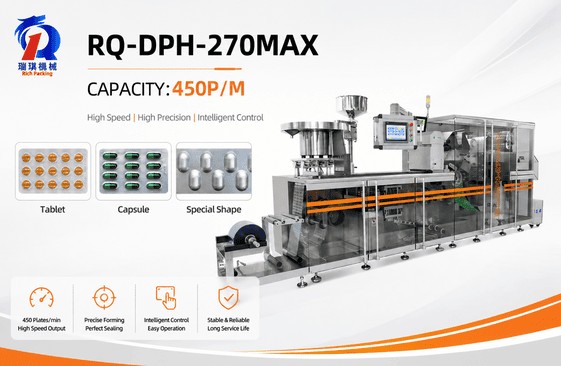
Mesin blister penggelek menggunakan prinsip kerja putaran berterusan. Proses pembentukan, pengedapan dan pemotongan disegerakkan dengan pergerakan bahan.
Dengan reka bentuk penggelek yang dioptimumkan dan teknologi kawalan servo, mesin ini boleh mencapai suapan bahan yang lebih lancar, susun atur lebih cekap dan penggunaan filem PVC serta kerajang aluminium yang lebih baik.
Inilah sebabnya bagi pengilang dengan jumlah pengeluaran tahunan yang tinggi, perbezaan antara mesin pembungkusan blister plat rata dan sistem pembungkusan blister penggelek boleh menjadi faktor penting dalam kos operasi jangka panjang.
Persoalannya bukan sahaja:
"Berapa banyak pek blister yang boleh dihasilkan oleh mesin ini?"
Soalan yang lebih penting ialah:
"Berapa banyak kos yang boleh dijimatkan oleh mesin ini sepanjang bertahun-tahun pengeluaran?"
Kos pengeluaran tidak hanya ditentukan oleh harga pembelian mesin pembungkusan blister.
Bagi pengilang dengan permintaan pengeluaran tahunan yang besar, kos sebenar juga bergantung pada:
Untuk memahami cara reka bentuk mesin mempengaruhi nilai pengeluaran jangka panjang, kami menganalisis mesin lepuh penggelek RQ-DPH-270Max dan mesin lepuh plat rata DPP-270Max di bawah senario pengeluaran volum tinggi.
Pengiraan berikut adalah berdasarkan keadaan pengeluaran tertentu. Keputusan sebenar mungkin berbeza bergantung pada spesifikasi produk, jadual pengeluaran dan kos bahan.
|
Item |
Mesin Lepuh Penggelek RQ-DPH-270Max |
Mesin Lepuh Plat Rata DPP-270Max |
|
Prinsip operasi |
Sistem penggelek berterusan |
Sistem plat rata berselang |
|
Output maksimum |
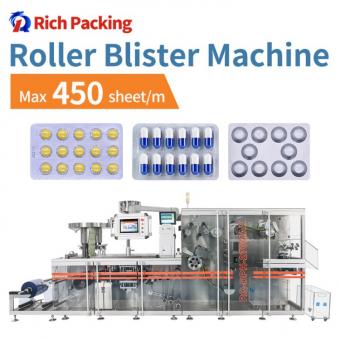
Sehingga 450 plat/min |
Sehingga 186 plat/min |
|
Pengeluaran yang sesuai |
Pengeluaran berterusan volum tinggi |
Pengeluaran fleksibel dengan pelbagai jenis produk |
Bagi pengeluar yang menghasilkan berjuta-juta kad lepuh setiap tahun, kecekapan pengeluaran yang lebih tinggi bermaksud:
✓ Output lebih tinggi dengan lebih sedikit mesin
✓ Keperluan ruang kilang yang lebih rendah
✓ Pengurangan keperluan tenaga kerja
✓ Penggunaan tenaga yang lebih rendah
Apabila permintaan pengeluaran terus meningkat, perbezaan kecekapan mesin menjadi faktor penting yang mempengaruhi jumlah kos pengeluaran.
Selain kapasiti pengeluaran, penggunaan bahan yang cekap merupakan satu lagi faktor penting yang mempengaruhi keuntungan jangka panjang.
Untuk pengiraan ini, kami menggunakan contoh pengeluaran volum tinggi:
|
Item |
Data |
|
Permintaan pengeluaran tahunan |
75.6 juta kad lepuh/tahun |
|
Struktur pembungkusan |
Filem PVC + kerajang aluminium PTP |
|
Kaedah pengiraan |
Membandingkan penggunaan bahan pembungkusan di bawah permintaan tahunan yang sama |
Andaian harga bahan:
|
Bahan Pembungkusan |
Spesifikasi |
Harga |
|
Filem PVC |
Ketebalan: 0.0025 mm / Ketumpatan: 1.4 |
USD 1.74/kg |
|
Kerajang aluminium PTP |
Ketebalan: 0.0002 mm / Ketumpatan: 2.8 |
USD 7.36/kg |
Kos bahan sebenar mungkin berbeza bergantung pada pembekal, spesifikasi bahan dan keadaan pasaran.
|
|
Mesin Blister Penggelek RQ-DPH-270Max |
Mesin Blister Plat Rata DPP-270Max |
|
Kos bahan bagi setiap kad blister |
USD 0.00493 |
USD 0.00528 |
|
Permintaan pengeluaran tahunan |
75.6 juta kad |
75.6 juta kad |
|
Kos bahan pembungkusan tahunan |
USD 372,000 |
USD 399,000 |
Berdasarkan senario pengeluaran ini:
Perbezaan kos bahan pembungkusan:
≈ USD 26,500/tahun
Perbezaan sebanyak USD 0.00035 bagi setiap kad blister mungkin kelihatan sangat kecil.
Namun, bagi pengeluar yang menghasilkan puluhan juta kad blister setiap tahun, penambahbaikan kecil dalam penggunaan bahan boleh menghasilkan penjimatan tahunan yang ketara.
Bahan pembungkusan bukanlah pelaburan sekali sahaja.
Ia merupakan kos operasi berterusan yang secara langsung menjejaskan keuntungan jangka panjang.
Penjimatan tahunan bukan sahaja datang daripada penggunaan filem PVC dan kerajang aluminium.
Berbanding mesin blister plat rata tradisional, DPH-270Max juga boleh membantu pengeluar mengurangkan kos pengeluaran tambahan melalui:
✓ Sisa bahan yang lebih rendah semasa pelarasan mesin
✓ Pengurangan bahan buangan yang disebabkan oleh ketidakstabilan pengeluaran
✓ Pertukaran acuan yang lebih pantas dan masa henti yang lebih singkat
✓ Penggunaan buruh dan tenaga yang lebih rendah
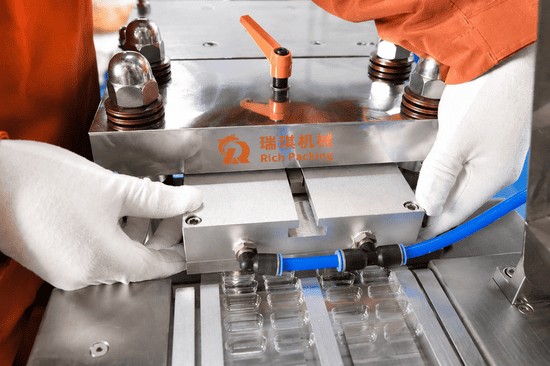
Sebagai contoh, semasa pelarasan mesin, mesin blister plat rata tradisional mungkin menggunakan sekitar 50 kg filem PVC, manakala DPH-270Max boleh mengawal sisa dalam lingkungan kira-kira 10 kg.
Selain itu, kecekapan pertukaran acuan merupakan satu lagi faktor penting. Mesin plat rata tradisional mungkin memerlukan kira-kira satu hari untuk pelarasan selepas penggantian acuan, manakala DPH-270Max boleh melengkapkan proses tersebut dalam masa kira-kira 20 minit.
Bagi pengeluar yang menghasilkan berjuta-juta pek blister setiap tahun, pemilihan mesin pembungkusan blister bukan hanya tentang harga pembelian awal.
Ia adalah tentang memilih penyelesaian yang terus mengurangkan kos operasi sepanjang jangka hayat mesin.
Bahan pembungkusan yang anda jimatkan dalam satu tahun mungkin mencukupi untuk membayar sebuah lagi mesin.
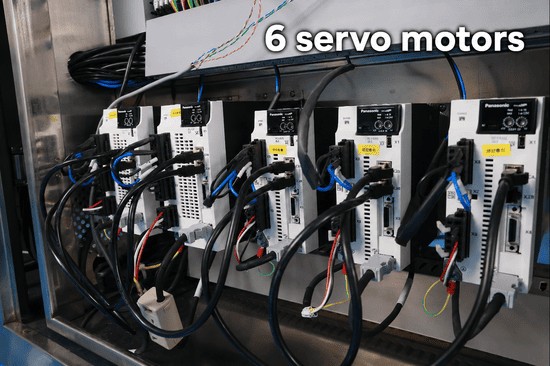
DPH-270Max menggunakan sistem pemacu servo penuh, di mana berbilang motor servo diselaraskan melalui pengawal gerakan berprestasi tinggi.
Daripada bergantung pada struktur penghantaran mekanikal tradisional, setiap pergerakan utama dikawal dan disegerakkan dengan tepat, termasuk:
Kawalan pergerakan terselaras ini memastikan:
✓ Operasi stabil pada kelajuan tinggi
✓ Penyegerakan tepat antara stesen
✓ Tindak balas lebih pantas semasa pelarasan parameter
✓ Kualiti pembungkusan yang konsisten
Kelajuan tinggi bukan sahaja tentang bergerak lebih pantas. Ia adalah tentang mengekalkan ketepatan dan kestabilan semasa beroperasi dengan lebih pantas.
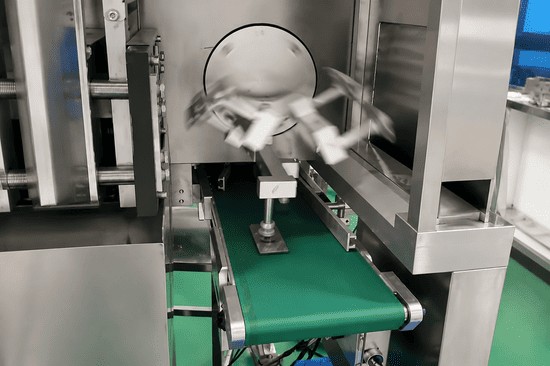
Struktur penggelek membolehkan proses pembungkusan lepuh berjalan secara berterusan dan lancar.
Berbanding sistem pergerakan berselang tradisional, DPH-270Max direka untuk pengeluar yang memerlukan:
Dengan reka bentuk mekanikal yang dioptimumkan dan kawalan servo yang disegerakkan, mesin ini boleh mencapai sehingga 450 plat/min sambil mengekalkan kestabilan pengeluaran.
Bagi pengilang kontrak dan kilang yang menghasilkan produk berbeza, masa pertukaran secara langsung mempengaruhi kapasiti pengeluaran.
DPH-270Max menggabungkan reka bentuk modular untuk memudahkan pelarasan dan mengurangkan masa henti.
Pertukaran yang lebih pantas bermaksud:
✓ Lebih banyak masa pengeluaran tersedia
✓ Penggunaan peralatan yang lebih tinggi
✓ Kos buruh yang lebih rendah
DPH-270Max boleh disesuaikan untuk keperluan pembungkusan yang berbeza, termasuk:
Digabungkan dengan peralatan hiliran seperti mesin pengkartonan, ia boleh diintegrasikan ke dalam satu barisan pembungkusan automatik lengkap.
Apabila melabur dalam mesin pembungkusan lepuh, harga pembelian hanyalah permulaan.
Bagi pengeluar dengan rancangan pengeluaran jangka panjang, nilai sebenar datang daripada:
RQ-DPH-270Max bukan sekadar mesin lepuh berkelajuan tinggi.
Dengan teknologi penggelek canggih, sistem pemacu servo penuh dan penyelarasan pergerakan pintar, ia membantu pengeluar mengoptimumkan keseluruhan proses pengeluaran — daripada penggunaan bahan hingga ke kecekapan operasi harian.
Kerana dalam pengeluaran berskala besar, setiap penambahbaikan kecil adalah penting.
Mesin yang berharga lebih rendah hari ini mungkin tidak semestinya mencipta lebih banyak nilai pada masa hadapan.
Pilih penyelesaian pembungkusan lepuh yang terus mencipta nilai sepanjang hayat penggunaannya.
Tidak semestinya. Pilihan terbaik bergantung pada keperluan pengeluaran anda.
Mesin lepuh plat rata sesuai untuk jumlah pengeluaran kecil hingga sederhana dan aplikasi yang memerlukan lebih banyak fleksibiliti.
Mesin lepuh berpenggelek lebih sesuai untuk pengeluar dengan keperluan pengeluaran berterusan dan jumlah tinggi, di mana kecekapan pengeluaran, penggunaan bahan dan kos operasi jangka panjang merupakan faktor penting.
Pilihan yang tepat bergantung pada:
Penggunaan bahan pembungkusan dipengaruhi oleh banyak faktor, termasuk:
Mesin lepuh berpenggelek RQ-DPH-270Max menggunakan struktur penggelek berterusan dengan proses suapan bahan dan pembentukan yang dioptimumkan, membantu pengeluar meningkatkan penggunaan filem PVC dan kerajang aluminium.
Apabila menghasilkan berjuta-juta pek lepuh setiap tahun, walaupun sedikit peningkatan dalam penggunaan bahan boleh menghasilkan penjimatan kos yang ketara.
Penjimatan sebenar bergantung pada jumlah pengeluaran, saiz produk dan spesifikasi bahan.
Berdasarkan perbandingan antara mesin lepuh berpenggelek RQ-DPH-270Max dan mesin lepuh plat rata DPP-270Max:
Perbezaan kos bahan boleh mencapai kira-kira RMB 190,000 setahun.
Penjimatan tambahan mungkin datang daripada:
Kelajuan tinggi sahaja tidak menjamin pengeluaran yang cekap.
Mesin lepuh berprestasi tinggi memerlukan setiap stesen berfungsi bersama dengan tepat.
DPH-270Max menggunakan sistem pemacu servo penuh, di mana beberapa motor servo diselaraskan melalui pengawal gerakan.
Ini membolehkan penyegerakan tepat antara:
Hasilnya ialah:
Perbezaan utama ialah prinsip kerja.
Mesin lepuh plat rata menggunakan proses pergerakan berselang-seli, di mana setiap stesen berfungsi langkah demi langkah.
Mesin lepuh jenis penggelek menggunakan proses pergerakan putaran berterusan, membolehkan pergerakan bahan yang lebih lancar dan pengeluaran berkelajuan tinggi yang lebih stabil.
Untuk pengeluaran berskala besar, struktur penggelek boleh memberikan kelebihan dalam:
Ya.
RQ-DPH-270Max direka untuk industri yang memerlukan penyelesaian pembungkusan lepuh yang boleh dipercayai dan berterusan, termasuk:
Dengan keupayaan pengeluaran berkelajuan tinggi, operasi dikawal servo dan kecekapan pembungkusan yang dioptimumkan, ia membantu pengeluar mencapai pengeluaran yang stabil dan menjimatkan kos.
Tidak semestinya.
Produktiviti sebenar sesebuah mesin bergantung pada:
Mesin yang beroperasi pantas tetapi memerlukan pelarasan yang kerap mungkin tidak menghasilkan nilai yang lebih tinggi.
Pengeluaran berkelajuan tinggi hanya menjadi bernilai apabila digabungkan dengan ketepatan dan kestabilan.
Sebelum memilih mesin lepuh, pengeluar perlu mempertimbangkan:
Untuk pengeluaran berterusan volum tinggi, mesin pembungkusan lepuh jenis penggelek boleh memberikan nilai jangka panjang yang lebih baik.
Untuk pengeluaran fleksibel dengan kelompok yang lebih kecil, mesin lepuh plat rata mungkin merupakan pilihan yang lebih sesuai.

29+ years in pharmaceutical machinery, covering capsule filling, tablet pressing, blister packaging, tablet and capsule counting, cartoning, GMP production, and overseas machine service.

E-mel : manager@richpacking.cn
Building D, No. 226, Beishan Qiaotou Street, Haizhu District, Guangzhou City, Guangdong Province, China


 Rangkaian IPv6 disokong