






 Rumah
Rumah Produk
29+ years in pharmaceutical machinery, covering capsule filling, tablet pressing, blister packaging, tablet and capsule counting, cartoning, GMP production, and overseas machine service.

Dalam pembuatan tablet, pengeluar sering memberi tumpuan kepada kelajuan pengeluaran, daya mampatan dan automasi apabila memilih mesin penekan tablet. Walau bagaimanapun, perkakasan penekan tablet juga penting untuk pemampatan tablet.
Penebuk dan acuan ialah komponen yang bersentuhan dengan produk semasa setiap kitaran penekanan. Bahan, kemasan permukaan dan reka bentuk strukturnya secara langsung mempengaruhi kualiti tablet, kecekapan pengeluaran dan kos operasi keseluruhan. Hal ini amat benar apabila mesin penekan tablet menghadapi produk khas seperti bahan berasid, melekit, kasar atau sensitif terhadap kelembapan. Dalam hal ini, perkakasan penekan tablet yang tidak sesuai boleh menyebabkan masalah pengeluaran dan masa henti yang mahal.
Panduan ini akan menerangkan cara memilih perkakasan penekan tablet yang sesuai untuk bahan mencabar yang berbeza dan bagaimana penyelesaian tersuai mesin penekan tablet boleh membantu memaksimumkan produktiviti sambil mengurangkan kos penyelenggaraan.
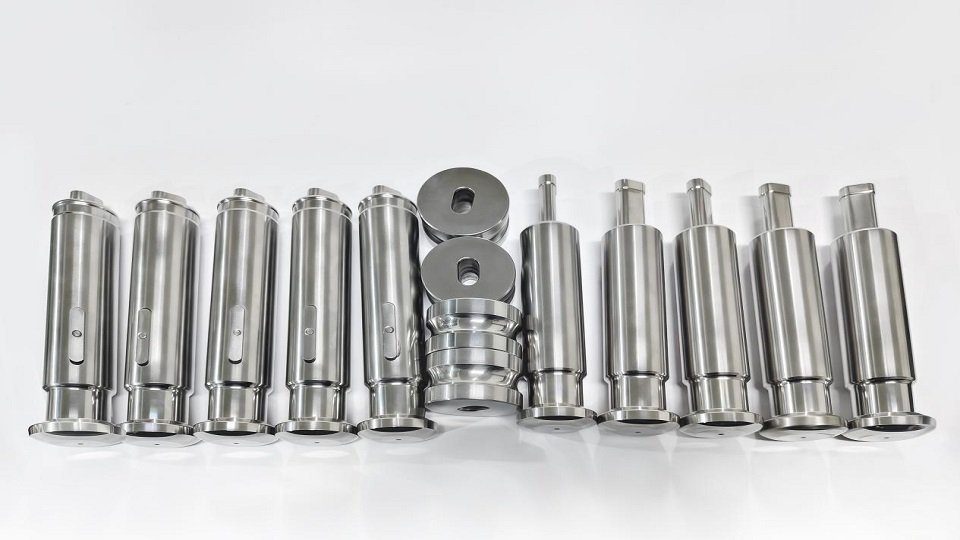
Perkakasan penekan tablet
Memilih perkakasan penekan tablet yang tepat melibatkan lebih daripada sekadar menggantikan penebuk dan acuan yang haus. Ia amat penting untuk kualiti tablet, kebolehpercayaan mesin dan kos pembuatan. Terutamanya apabila menekan produk khas, mesin pemampatan tablet banyak bergantung pada perkakasan yang sesuai berdasarkan sifat bahan dan kesannya. Sebelum meneroka pilihan perkakasan penekan tablet untuk bahan yang berbeza, adalah penting untuk memahami cara penebuk dan acuan berfungsi dalam mesin penekan tablet serta mengapa pemilihan perkakasan memainkan peranan penting dalam pemampatan tablet.
Ramai pengeluar menganggap perkakasan penekan tablet, termasuk penebuk atas, penebuk bawah dan acuan, sebagai bahagian guna habis yang ringkas. Sebenarnya, ia ialah komponen kejuruteraan ketepatan yang menentukan sejauh mana berkesannya serbuk atau granul dimampatkan menjadi tablet siap.
Mesin penekan tablet memampatkan serbuk atau granul menjadi tablet di dalam acuan melalui pergerakan terselaras penebuk atas dan penebuk bawah. Semasa setiap kitaran pemampatan, komponen ini bekerjasama untuk memastikan pembentukan tablet. Selain itu, saiz dan bentuk perkakasan penekan tablet menentukan rupa tablet.
Sebelum pemampatan, penebuk bawah berada pada kedalaman yang telah ditetapkan di dalam acuan untuk memastikan suapan bahan, yang menentukan jumlah serbuk yang diisi. Semasa pemampatan tablet, penebuk atas bergerak ke bawah dan penebuk bawah bergerak ke atas ke dalam acuan lalu mengenakan daya mampatan pada bahan. Selepas pemampatan, penebuk bawah naik untuk menolak tablet siap keluar daripada acuan bagi proses pelepasan.
Hanya apabila penebuk atas, penebuk bawah dan acuan dihasilkan dengan tepat serta dipadankan dengan sempurna, mesin penekan tablet dapat menghasilkan tablet secara konsisten dengan berat, kekerasan, ketebalan dan rupa yang seragam. Memandangkan perkakasan penekan tablet bersentuhan secara langsung dengan bahan, ia sangat mempengaruhi kecekapan pemampatan, kualiti tablet, kehausan mesin dan keperluan kebersihan mesin penekan tablet.
Untuk bahan khas, pengeluaran stabil dan masalah operasi berulang menjadi isu yang mencabar. Inilah sebabnya pemilihan perkakasan penekan tablet yang betul sama pentingnya dengan pemilihan mesin penekan tablet itu sendiri.
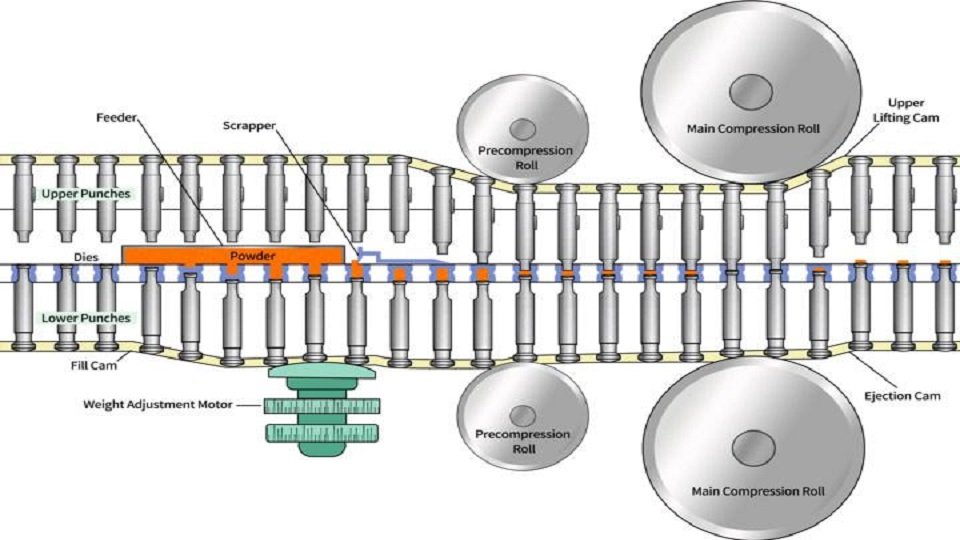
Prinsip kerja mesin penekan tablet berkelajuan tinggi
Banyak masalah dalam pemampatan tablet, seperti kecacatan tablet, pembentukan tablet yang lemah dan lelasan perkakasan, biasanya dikaitkan dengan mesin penekan tablet itu sendiri, manakala dalam sesetengah kes, punca sebenar ialah padanan yang tidak sesuai antara perkakasan penekan tablet dan bahan khas.
Peningkatan Lekatan dan Penolakan
Bahan melekit cenderung melekat pada permukaan penebuk, menyebabkan:
Kehausan Dipercepatkan
Bahan kasar boleh menghakis hujung penebuk dan dinding acuan dengan cepat. Ini akan menyebabkan:
Kerosakan Kakisan
Bahan berasid boleh memberi kesan kimia kepada keluli perkakasan standard. Lama-kelamaan, ia boleh mengakibatkan:
Kelajuan Pengeluaran Lebih Rendah
Apabila pelekatan, kehausan atau kakisan yang dinyatakan di atas berlaku, pengeluar sering terpaksa mengurangkan kelajuan dan kekerapan pengeluaran untuk mengekalkan kualiti. Hasilnya ialah:
Peningkatan Masa Henti Mesin
Penyelenggaraan yang kerap, penggilapan, pembersihan dan penggantian perkakas mesin penekan tablet boleh menyebabkan:
Oleh itu, bagi pengeluar yang memampatkan bahan khas, pemilihan perkakas mesin penekan tablet yang sesuai selalunya merupakan salah satu cara paling menjimatkan kos untuk meningkatkan produktiviti.
Walaupun serbuk farmaseutikal konvensional selalunya boleh diproses menggunakan penebuk dan acuan standard, banyak produk nutraseutikal, farmaseutikal dan kimia mengandungi bahan dengan ciri fizikal atau kimia yang unik. Bahan khas ini berinteraksi secara berbeza dengan perkakas mesin penekan tablet, menjadikan perkakas standard tidak sesuai untuk pengeluaran jangka panjang berkelajuan tinggi.
Memahami sifat bahan ini ialah langkah pertama ke arah memilih perkakas yang memastikan kualiti tablet yang konsisten, meminimumkan masa henti dan memanjangkan jangka hayat peralatan.
Bahan berasid digunakan secara meluas dalam industri farmaseutikal dan nutraseutikal. Contoh biasa termasuk tablet vitamin C, tablet asid sitrik, produk effervescent, suplemen asid amino dan ubat veterinar tertentu.
Tidak seperti bahan biasa, bahan berasid adalah aktif secara kimia. Semasa pemampatan, bahan ini bersentuhan secara langsung dengan permukaan penebuk dan dinding acuan di bawah tekanan yang sangat tinggi. Walaupun jumlah kelembapan yang sedikit dalam persekitaran boleh mempercepatkan tindak balas kimia antara bahan berasid dan permukaan perkakas mesin penekan tablet. Lama-kelamaan, tindak balas ini secara beransur-ansur menghakis logam.
Proses kakisan biasanya bermula dengan lekukan mikroskopik yang tidak dapat dilihat dengan mata kasar. Apabila pengeluaran diteruskan, lekukan kecil ini menjadi lebih besar dan kasar, meningkatkan geseran antara tablet dan permukaan penebuk. Setelah permukaan penebuk kehilangan kemasan licinnya, serbuk mula melekat dengan lebih mudah, menyebabkan permukaan tablet tidak konsisten.
Perkakas mesin penekan tablet yang berkarat turut menjejaskan ketepatan dimensi. Apabila hujung penebuk dan lubang acuan merosot, ketebalan, kekerasan dan konsistensi berat tablet menjadi semakin sukar dikawal. Dalam kes yang teruk, zarah karat atau serpihan logam boleh mencemari produk, menyebabkan kebimbangan kualiti dan kawal selia yang ketara.
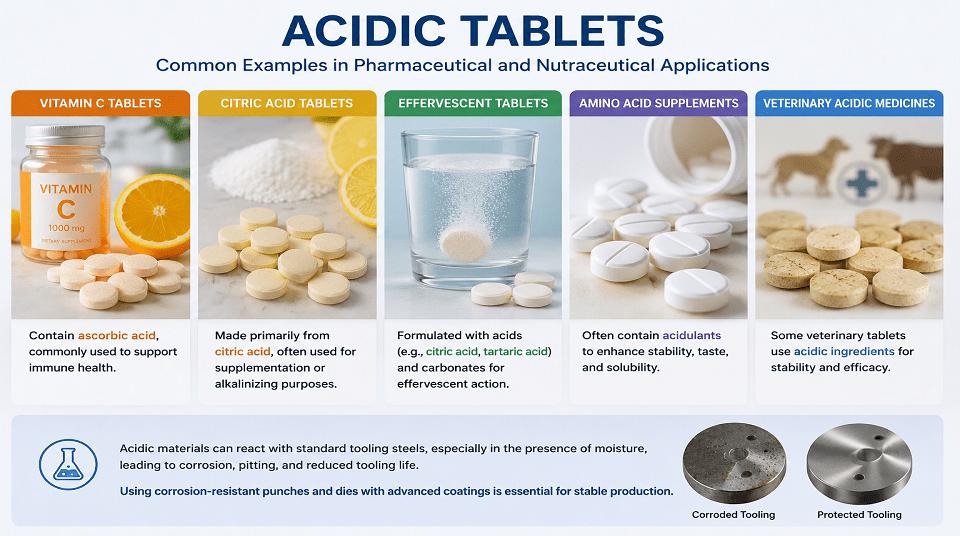
Tablet berasid
Cadangan Perkakas Mesin Penekan Tablet
Untuk mengelakkan masalah ini, ketahanan terhadap kakisan harus menjadi pertimbangan utama ketika memilih perkakas. Penebuk dan acuan yang diperbuat daripada keluli alat tahan karat berkeluli kromium tinggi memberikan ketahanan yang jauh lebih baik terhadap persekitaran berasid berbanding bahan konvensional. Rawatan permukaan seperti salutan Chromium Nitride (CrN), Titanium Nitride (TiN) atau Titanium Carbonitride (TiCN) menghasilkan penghalang perlindungan padat yang mengasingkan substrat keluli daripada bahan menghakis sambil mengurangkan geseran semasa pemampatan.
Bagi pengeluar yang menghasilkan tablet berasid secara berterusan, pemeriksaan berkala dan penggilapan permukaan perkakas juga harus dimasukkan ke dalam program penyelenggaraan pencegahan untuk mengenal pasti tanda awal kakisan sebelum kerosakan serius berlaku.
Bahan melekit biasanya terdapat dalam ubat herba, ekstrak botani, perubatan tradisional Cina, tablet kunyah, probiotik dan produk yang mengandungi sejumlah besar ekstrak semula jadi. Bahan ini biasanya mengandungi minyak, gula, resin atau komponen lain dengan kelikatan tinggi. Semasa pemampatan, tekanan yang dijana oleh mesin penekan tablet menyebabkan bahan-bahan ini menjadi lembut dan melekat pada permukaan logam dan bukannya terlepas dengan bersih selepas pembentukan.
Pada peringkat awal, hanya sedikit serbuk melekat pada penebuk. Walau bagaimanapun, dengan setiap kitaran pemampatan, bahan tambahan terkumpul, menyebabkan variasi berat tablet dan pencemaran perkakas mesin penekan tablet. Apabila pelekatan menjadi teruk, pengeluar perlu menghentikan mesin penekan tablet berulang kali untuk membersihkan penebuk, yang mengurangkan kecekapan pengeluaran, meningkatkan kos dan mengganggu operasi berterusan.
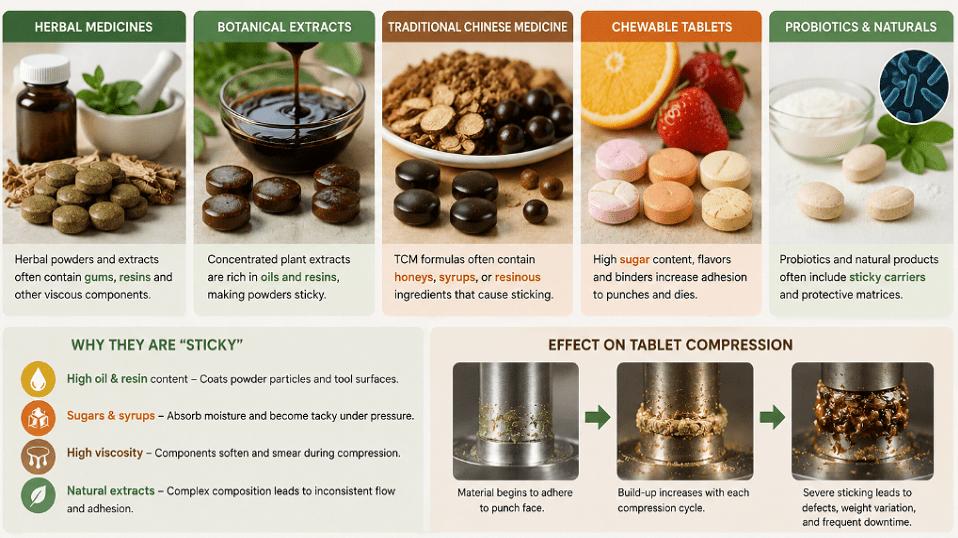
Tablet melekit
Cadangan Perkakas Mesin Penekan Tablet
Perkakas mesin penekan tablet terbaik untuk formulasi melekit terletak pada usaha mengurangkan lekatan dan bukannya sekadar meningkatkan kekerasan. Penebuk yang sangat digilap dengan kemasan cermin boleh mengurangkan kekasaran permukaan dengan ketara, meninggalkan lebih sedikit lokasi mikroskopik untuk bahan melekat. Salutan geseran rendah lanjutan, termasuk Chromium, atau salutan anti-lekat khusus seperti PTFE, boleh mengurangkan lagi kecenderungan serbuk melekat pada permukaan penebuk.
Geometri penebuk juga sama penting. Ukiran dalam, tepi tajam dan embossing kompleks meningkatkan kemungkinan pengumpulan bahan. Untuk produk melekit, memudahkan reka bentuk, meningkatkan sudut draf dan membulatkan bucu tajam sering menghasilkan peningkatan ketara dalam pemampatan tablet tanpa mengubah formulasi itu sendiri.
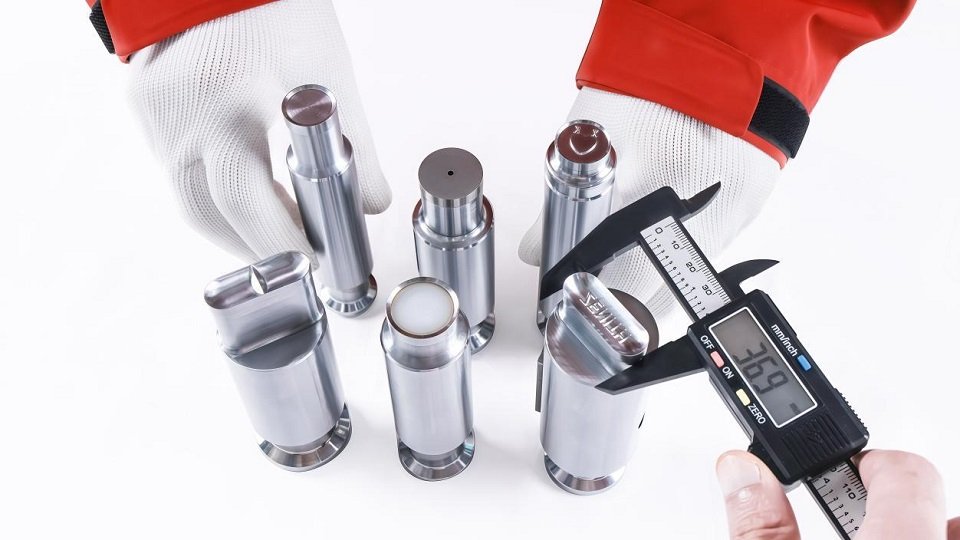
Penebuk bersalut PTFE
Sesetengah bahan bertindak seperti kertas pasir halus semasa pemampatan tablet. Suplemen mineral, tablet kalsium, tablet karbon teraktif, produk arang, bahan tambahan seramik dan produk yang mengandungi silikon dioksida atau zarah bukan organik keras lain semuanya termasuk dalam kategori ini. Tidak seperti bahan melekit, serbuk pelelas biasanya memampat dengan baik. Cabaran utamanya terletak pada kehausan mekanikal yang dikenakan terhadap penebuk dan acuan.
Setiap kitaran pemampatan memaksa zarah keras meluncur merentasi hujung penebuk dan dinding acuan di bawah tekanan yang mungkin melebihi ratusan megapascal. Lama-kelamaan, zarah ini secara beransur-ansur menanggalkan lapisan mikroskopik logam daripada permukaan perkakas melalui geseran berterusan.
Tanda pertama kehausan biasanya sukar dilihat. Hujung penebuk kehilangan kilauan asalnya dan lubang acuan mengalami kerosakan secara perlahan. Apabila kehausan berkembang, kelegaan antara penebuk dan acuan meningkat. Ini membolehkan kebocoran serbuk semasa pemampatan, menghasilkan habuk berlebihan, kadar penolakan lebih tinggi dan tekanan lebih besar pada komponen lain mesin penekan tablet. Akhirnya, penggantian perkakas yang tidak dapat dielakkan menyebabkan peningkatan kos penyelenggaraan dan masa henti pengeluaran.
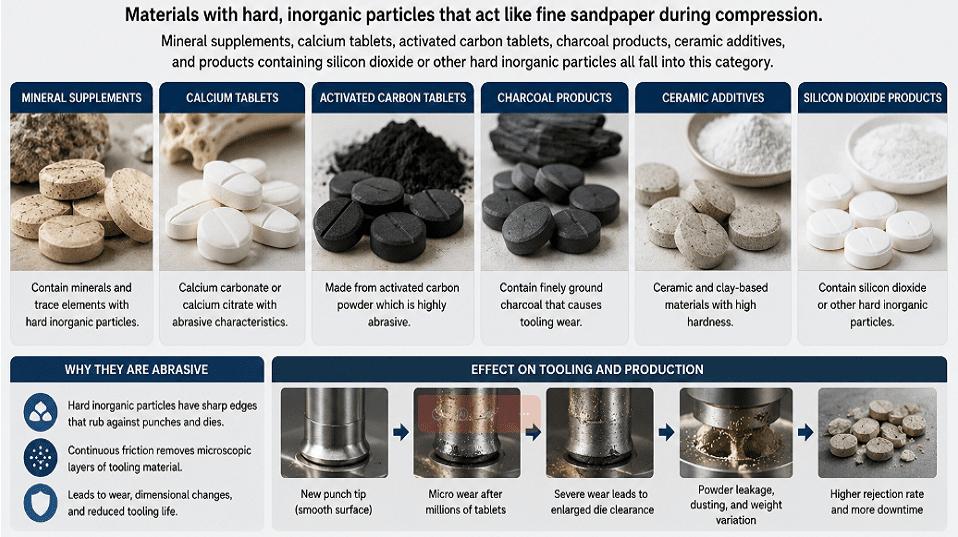
Produk pelelas
Cadangan Perkakas Mesin Penekan Tablet
Oleh sebab kehausan pelelas ialah proses mekanikal sepenuhnya, kekerasan perkakas menjadi faktor pemilihan yang paling kritikal.
Keluli alat berkekerasan tinggi memberikan ketahanan yang lebih baik berbanding bahan konvensional, manakala salutan tahan haus seperti Titanium Nitride (TiN), Titanium Aluminum Nitride (TiAlN) dan salutan berasaskan tungsten karbida memanjangkan jangka hayat perkhidmatan dengan ketara melalui pembentukan permukaan perlindungan yang sangat keras.
Pengeluar yang menekan produk pelelas juga harus menetapkan selang pemeriksaan perkakas mesin penekan tablet yang lebih pendek. Menggantikan atau membaik pulih penebuk dan acuan sebelum kehausan berlebihan berlaku membantu mengekalkan kualiti tablet yang konsisten dan mengelakkan kerosakan sekunder yang mahal pada mesin penekan tablet.
Formulasi farmaseutikal dan nutraseutikal tertentu mudah menyerap kelembapan daripada persekitaran sekeliling. Penyediaan enzim, tablet elektrolit, dan banyak bahan aktif farmaseutikal sangat higroskopik, bermaksud ia menyerap wap air walaupun dalam keadaan kelembapan yang agak rendah.
Apabila kelembapan diserap, sifat fizikal serbuk mula berubah. Granul yang mengalir bebas boleh menjadi lembut dan melekit, menyebabkan bahan tersebut lebih mudah melekat pada permukaan penebuk semasa pemampatan tablet. Selain itu, kelembapan yang digabungkan dengan bahan aktif farmaseutikal atau eksipien berasid mempercepatkan kakisan dan pengoksidaan keluli alat konvensional.
Ketidakstabilan pengeluaran sering menjadi petunjuk pertama penyerapan kelembapan berlebihan. Pengilang mungkin mendapati berat tablet berubah-ubah, kekerasan tidak konsisten, atau pelekatan yang tidak dijangka walaupun tetapan mesin tidak berubah. Masalah ini sering menjadi lebih ketara semasa musim lembap atau di kemudahan dengan kawalan persekitaran yang tidak mencukupi.
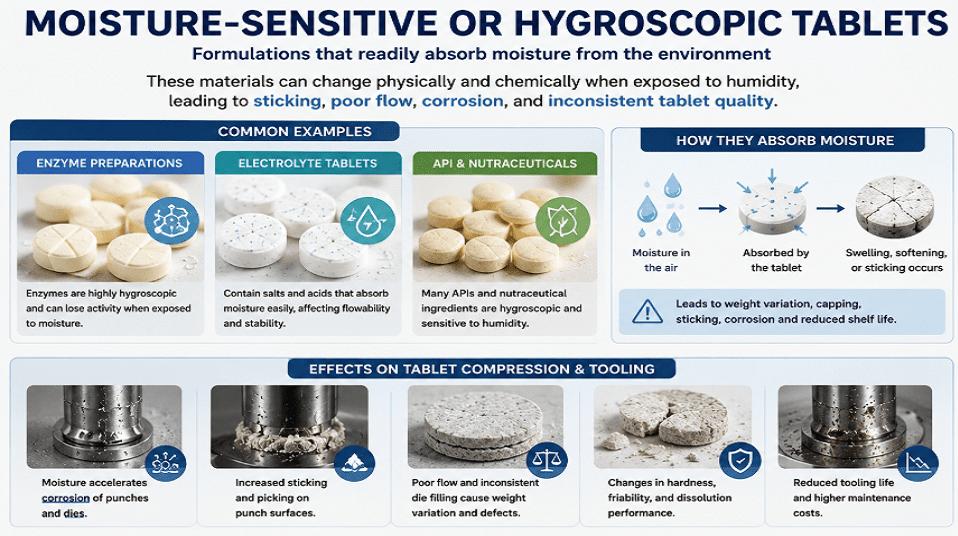
Tablet Sensitif Kelembapan atau Higroskopik
Cadangan Perkakas Mesin Penekan Tablet
Oleh itu, perkakas mesin penekan tablet untuk bahan higroskopik hendaklah menggabungkan rintangan kakisan yang sangat baik dengan ciri permukaan geseran rendah.
Keluli alat tahan karat, salutan tahan kakisan, dan permukaan penebuk yang digilap membantu meminimumkan lekatan berkaitan kelembapan sambil melindungi perkakas daripada pengoksidaan. Selain itu, ia perlu digabungkan dengan kawalan lain, termasuk bilik pengeluaran yang dinyahkelembapan, sistem suapan tertutup mesin penekan tablet, dan pemindahan bahan yang pantas untuk mengurangkan pendedahan kepada kelembapan ambien.
Apabila membeli mesin pemampatan tablet, banyak pengilang hanya menumpukan perhatian kepada kos berbanding konfigurasi mesin. Walau bagaimanapun, kos sebenar pengeluaran tablet merangkumi masa henti, tablet yang ditolak, penyelenggaraan, penggantian perkakas mesin penekan tablet, dan kapasiti pengeluaran yang hilang.
Dalam hal ini, pembekal profesional mesin penekan tablet diperlukan untuk memberikan cadangan tersuai kepada pengilang bagi meningkatkan kestabilan pengeluaran dan mengurangkan kos tersembunyi ini. Begitulah cara Rich Packing membantu pelanggan memilih mesin yang sesuai dengan penyelesaian tersuai.
Memilih penebuk dan acuan yang betul adalah penting, tetapi untuk bahan khas, perkakas mesin penekan tablet tidak boleh dipertimbangkan secara berasingan. Ia mesti berfungsi bersama tetapan tersuai lain bagi mesin pemampatan tablet.
Sebagai pembekal berpengalaman, Rich Packing akan terlebih dahulu menjalankan analisis terperinci terhadap keperluan pengeluaran pelanggan. Ini biasanya merangkumi pemahaman tentang sifat bahan, sasaran kekerasan tablet, dimensi, output yang dijangka, keadaan persekitaran, dan cabaran pembuatan sedia ada.
Daripada hanya mencadangkan konfigurasi mesin standard, Rich Packing menilai bagaimana bahan berkelakuan sepanjang keseluruhan proses pemampatan, daripada suapan dan pengisian acuan hingga pemampatan dan pelepasan tablet, kemudian menyesuaikan konfigurasi mesin penekan tablet dengan sewajarnya.
Sebagai contoh, bagi bahan melekit, penebuk atas, penebuk bawah, dan acuan boleh disesuaikan dengan permukaan anti-lekat bersalut PTFE atau geseran rendah lain untuk meminimumkan lekatan serbuk semasa pemampatan. Pada masa yang sama, mesin boleh dilengkapi dengan penyuap dayayang secara aktif menolak bahan ke dalam setiap rongga acuan dan bukannya bergantung sepenuhnya pada graviti. Ini memastikan pengisian acuan yang konsisten walaupun untuk serbuk yang bersifat kohesif atau mempunyai aliran yang kurang baik, menghasilkan keseragaman berat yang lebih baik dan pengeluaran stabil pada kelajuan lebih tinggi.
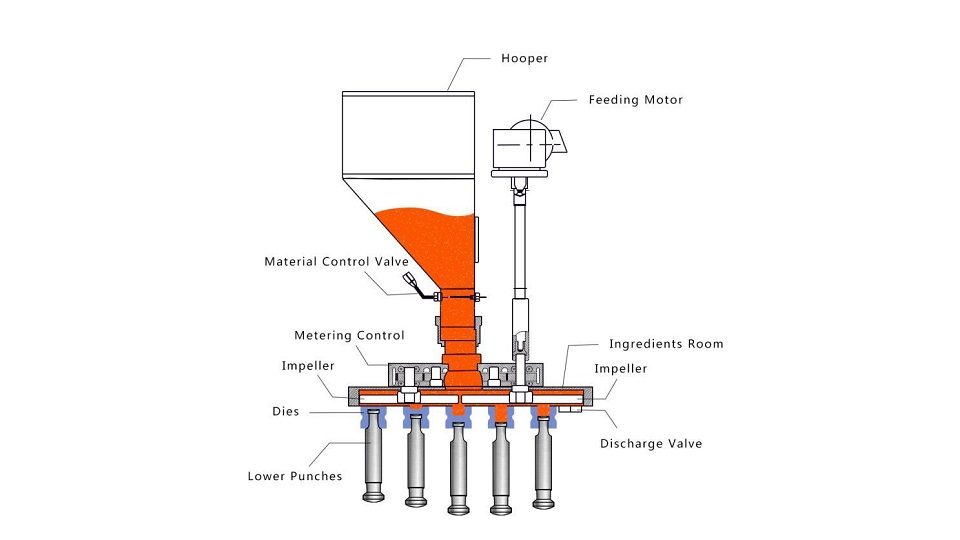
Prinsip kerja sistem suapan daya
Dalam sesetengah kes, walaupun mesin penekan tablet paling canggih tidak dapat mengimbangi sepenuhnya bahan yang sememangnya sukar dimampatkan. Oleh sebab itu, pembekal berpengalaman memperluaskan sokongan mereka melangkaui pemilihan peralatan dan memberikan panduan praktikal mengenai pengoptimuman formulasi.
Daripada hanya mencadangkan perkakas mesin penekan tablet atau mengurangkan kelajuan pengeluaran, pasukan jurutera profesional Rich Packing akan menganalisis keseluruhan proses pembuatan. Mereka menyemak formulasi, menilai tingkah laku pemampatan bahan, dan mengenal pasti faktor asas yang menyumbang kepada ketidakstabilan pengeluaran. Berdasarkan analisis ini, mereka mungkin mencadangkan pelarasan praktikal yang menjadikan formulasi lebih sesuai untuk pemampatan tablet berkelajuan tinggi.
Sebagai contoh, apabila memproses formulasi herba yang melekit, jurutera mungkin mencadangkan pengoptimuman nisbah pengikat untuk mengurangkan lekatan berlebihan sambil mengekalkan kekerasan tablet. Jika formulasi mengandungi pelincir yang tidak mencukupi, menambah atau melaraskan kadar pelincir biasa boleh mengurangkan geseran antara serbuk dan permukaan penebuk, meningkatkan pelepasan tablet dan meminimumkan pelekatan. Dalam kes apabila kebolehaliran yang lemah menjadi isu utama, mengubah suai proses granulasi untuk menghasilkan taburan saiz zarah yang lebih seragam boleh meningkatkan konsistensi pengisian acuan dan ketepatan berat dengan ketara.
Bahan khas memberikan keperluan unik terhadap perkakas mesin penekan tablet. Oleh kerana penebuk dan acuan berinteraksi secara langsung dengan produk dalam setiap kitaran pemampatan, pemilihan perkakas yang sesuai untuk mesin pemampatan tablet adalah penting bagi mengekalkan kualiti tablet, memaksimumkan kecekapan pengeluaran, dan mengurangkan kos operasi.
Pada akhirnya, pembekal yang paling bernilai bukanlah pihak yang menjual perkakas mesin penekan tablet paling mahal, tetapi pihak yang membantu pelanggan menyelesaikan masalah dari kedua-dua arah. Di satu pihak, mereka mengoptimumkan konfigurasi mesin, bahan perkakas, dan sistem pemampatan. Di pihak yang lain, mereka menambah baik formulasi dan proses pengeluaran itu sendiri. Dengan menggabungkan kepakaran peralatan dengan pengetahuan proses, mereka membantu pelanggan mencapai kualiti tablet yang stabil, kecekapan pengeluaran yang lebih tinggi, jangka hayat perkakas yang lebih panjang, dan kos pembuatan yang lebih rendah dalam jangka panjang.
Mesin Penekan Tablet Berkelajuan Tinggi HGZP-26D Rich Packing
S1: Apakah perkakas mesin penekan tablet?
Perkakas mesin penekan tablet merujuk kepada penebuk atas, penebuk bawah, dan acuan yang digunakan dalam mesin penekan tablet untuk memampatkan serbuk atau granul menjadi tablet. Semasa pemampatan tablet, komponen ini menentukan diameter, bentuk, kekerasan, dan kemasan permukaan tablet. Oleh sebab ia merupakan satu-satunya bahagian yang bersentuhan secara langsung dengan bahan, gred bahan, rawatan permukaan, dan ketepatan dimensinya mempunyai kesan besar terhadap kecekapan pengeluaran dan kualiti tablet.
S2: Mengapakah pemilihan perkakas penting untuk bahan khas?
Bahan khas seperti formulasi melekit, berasid, kasar, atau higroskopik berkelakuan sangat berbeza daripada serbuk konvensional semasa pemampatan. Penggunaan perkakas mesin penekan tablet yang tidak sesuai boleh menyebabkan pelekatan, kakisan, haus berlebihan, berat tablet tidak konsisten, masa henti mesin yang kerap, dan peningkatan kos penyelenggaraan. Pemilihan penebuk dan acuan yang direka khusus mengikut sifat bahan membantu mengekalkan pengeluaran stabil, memanjangkan hayat perkakas, dan mengurangkan kos pembuatan keseluruhan.
S3: Bagaimanakah masalah pelekatan boleh dikurangkan semasa pemampatan tablet?
Pelekatan boleh diminimumkan dengan menggabungkan beberapa pendekatan dan bukannya hanya bergantung pada perkakas. Penyelesaian biasa termasuk menggunakan penebuk yang digilap cermin atau bersalut PTFE, memasang penyuap daya untuk meningkatkan aliran serbuk dan pengisian acuan, serta mengawal suhu dan kelembapan bilik pengeluaran. Gabungan pengoptimuman mesin dan penambahbaikan formulasi biasanya memberikan hasil terbaik.
S4: Bolehkah konfigurasi mesin disesuaikan untuk formulasi yang sukar?
Ya. Rich Packing boleh menyesuaikan konfigurasi mesin penekan tablet mengikut sifat bahan dan keperluan pengeluaran. Penyelesaian tersuai biasanya memberikan prestasi jangka panjang yang lebih baik berbanding hanya menggantikan penebuk dan acuan.
S5: Selain perkakas, apakah faktor lain yang mempengaruhi kualiti pemampatan tablet?
Peralatan hanyalah satu bahagian daripada pengeluaran tablet yang berjaya. Reka bentuk formulasi, kualiti granulasi, kandungan kelembapan, daya mampatan, prestasi penyuap, dan keadaan persekitaran semuanya mempengaruhi kualiti tablet. Bekerjasama dengan pembekal mesin penekan tablet yang berpengalaman yang menyediakan cadangan peralatan dan panduan formulasi boleh meningkatkan kestabilan pengeluaran dengan ketara serta mengurangkan kos operasi.

29+ years in pharmaceutical machinery, covering capsule filling, tablet pressing, blister packaging, tablet and capsule counting, cartoning, GMP production, and overseas machine service.

E-mel : manager@richpacking.cn
Building D, No. 226, Beishan Qiaotou Street, Haizhu District, Guangzhou City, Guangdong Province, China


 Rangkaian IPv6 disokong