






 Rumah
Rumah Produk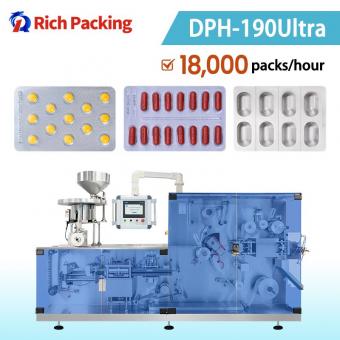
29+ years in pharmaceutical machinery, covering capsule filling, tablet pressing, blister packaging, tablet and capsule counting, cartoning, GMP production, and overseas machine service.

Setiap pengurus pengeluaran menghadapi persoalan yang sukar apabila melabur dalam peralatan pembungkusan: jenis mesin pembungkusan lepuh yang manakah benar-benar memberikan hasil terbaik untuk produk saya? Pilihan yang salah membawa kepada output yang perlahan, pembaziran bahan yang tinggi dan perubahan acuan yang berterusan. Penghentian mikro dan kehilangan pertukaran sahaja boleh menggunakan 15% hingga 25% daripada kapasiti teori barisan pembungkusan berkelajuan tinggi.
Panduan ini menghilangkan tekaan. Kami akan menguraikan tiga teknologi teras—roller, plat rata dan plat roller—membandingkannya secara bersebelahan dan memadankan setiap satunya dengan industri dan produk yang mempunyai prestasi terbaik. Sama ada anda membungkus tablet pepejal, madu cecair atau komponen elektronik, anda akan menemui laluan yang jelas ke kanan. pembungkusan lepuh farmaseutikal penyelesaian.
Untuk membuat keputusan yang bijak, anda perlu memahami apa yang berlaku di dalam setiap jenis mesin pembungkusan lepuh Walaupun ketiga-tiganya membentuk rongga dalam sarang plastik dan menutupnya dengan bahan penutup, cara ia menggunakan haba dan tekanan sangat berbeza. Perbezaan ini secara langsung mempengaruhi kelajuan, ketepatan dan apa yang anda boleh bungkus. Di bawah, kami mengkaji setiap reka bentuk mesin pembungkusan lepuh secara terperinci.
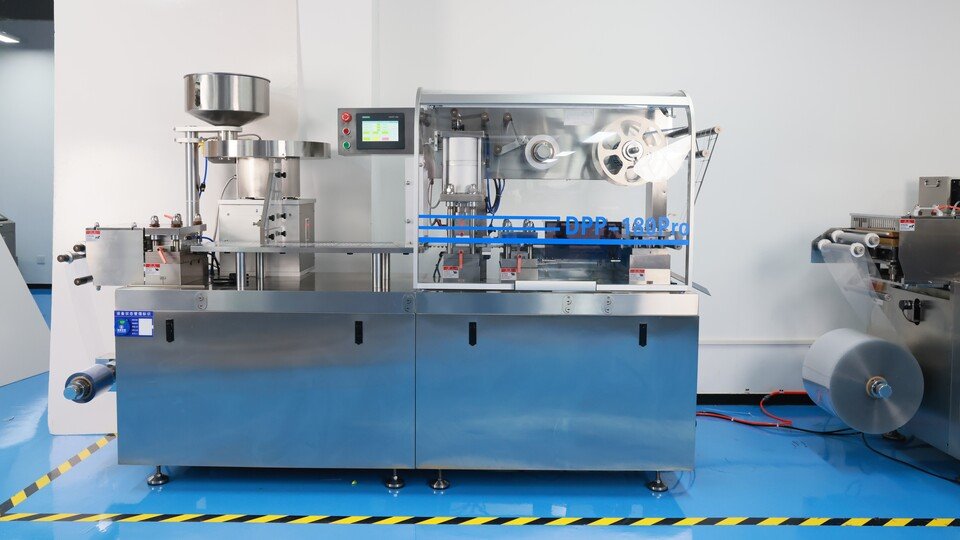
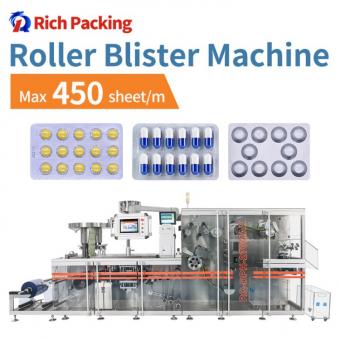
A mesin pek lepuh roller menggunakan dram berputar yang dipanaskan. Filem plastik membalut dram, dan vakum menariknya ke dalam acuan berbentuk poket pada permukaan penggelek. Oleh kerana putaran berterusan, pembentukan tidak pernah berhenti. Jaring bergerak ke hadapan kitaran demi kitaran tanpa gangguan.
Kelajuan adalah sebab utama pengeluar memilih teknologi ini. Mesin penggelek boleh mencapai output stabil lebih 200 lepuh seminit untuk bentuk yang kecil dan ringkas. [2] Untuk ubat generik bervolum tinggi yang mana satu produk beroperasi selama berhari-hari, tiada produk lain yang setanding dengan daya pemprosesan ini.
Mesin-mesin ini sesuai untuk kelompok besar tablet atau kapsul seragam dengan kedalaman pembentukan cetek, biasanya di bawah 10 mm. Walau bagaimanapun, reka bentuk acuan berputar mengehadkan kedalaman rongga dan konsistensi ketebalan dinding. Acuan itu sendiri mahal dan mengambil masa yang lebih lama untuk ditukar. Jika campuran pengeluaran anda berubah setiap minggu, teknologi mesin pek lepuh ini akan mewujudkan kesesakan.
A mesin pembungkusan lepuh plat rata berfungsi dalam kitaran sekejap-sekejap. Acuan pembentuk rata menekan plat yang dipanaskan untuk membentuk jaring plastik. Jaring berhenti, acuan menutup, vakum dan tekanan membentuk lepuh, acuan terbuka, dan jaring mengindeks ke hadapan. Gerakan henti-mula ini memberikan setiap rongga masa pembentukan yang sama.
Oleh kerana plastik kekal di bawah tekanan terkawal sepanjang fasa berhenti, mesin plat rata mencapai tarikan dalam. Sistem plat rata menunjukkan kelebihan yang jelas apabila kedalaman pembentukan melebihi 8-12 mm, dengan keupayaan tarikan dalam melebihi 25 mm. Ia cemerlang pada bentuk kompleks, seperti dulang peranti perubatan atau pembungkusan kosmetik dengan kontur yang tajam. Perubahan acuan juga lebih pantas daripada sistem penggelek, selalunya kurang daripada 30 minit.
Teknologi plat rata merupakan pilihan pertama untuk pengeluaran kelompok kecil, produk yang memerlukan rongga yang dalam dan barangan seperti picagari atau ampul yang memerlukan pengendalian yang lembut. Pertukarannya adalah kelajuan. Siri plat rata BLISTRIP-II mencapai output yang stabil sebanyak 300 pek seminit. Ini mewakili keupayaan plat rata yang lebih tinggi, menjadikan mesin ini kurang sesuai untuk penggunaan produk tunggal yang besar.
Mesin pembungkusan tablet plat penggelek menggabungkan stesen pemanasan gaya penggelek dengan stesen pembentukan plat rata. Jaring plastik pertama kali melalui penggelek prapemanasan. Kemudian ia memasuki kawasan pembentukan plat rata di mana rongga dibentuk. Persediaan ini mengekalkan kawalan pembentukan yang tepat bagi sistem plat rata sambil menggunakan prapemanasan sistem penggelek yang cekap.
Reka bentuk hibrid menggunakan penggelek pra-pemanasan diikuti dengan pembentukan plat rata. Reka bentuk plat penggelek menggunakan kuasa yang lebih sedikit di stesen pembentukan utama berbanding sistem plat rata tulen kerana penggelek pra-pemanasan berkongsi beban haba. Pada masa yang sama, keseragaman dinding lepuh menghampiri teknologi plat rata. Bagi pengeluar yang memerlukan kelajuan yang baik serta kualiti pembentukan yang baik, reka bentuk plat penggelek merapatkan jurang.
Sekarang anda tahu cara setiap mesin pembungkusan lepuh berfungsi, sudah tiba masanya untuk memadankannya dengan keperluan dunia sebenar anda. Gunakan empat kriteria di bawah untuk menilai matlamat produk dan pengeluaran anda. Tiada jawapan universal—pilihan optimum datang daripada jenis mesin pembungkusan lepuh kepada rangkaian produk tepat anda dan sasaran output harian.
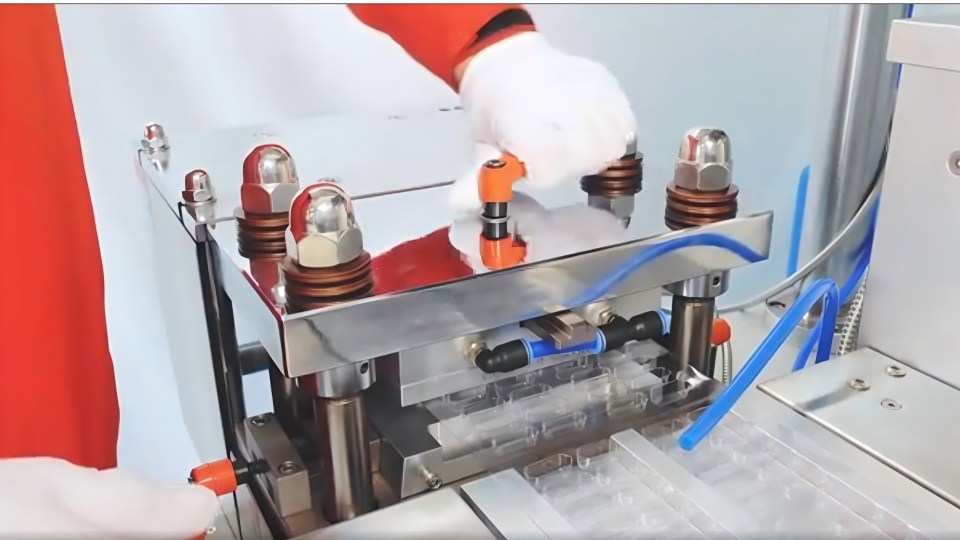
Pembungkusan Kaya penukaran acuan pantas dalam demonstrasi 10 minit
Mulakan dengan menentukan output yang diperlukan. Berapa banyak lepuh seminit yang mesti anda alami sepanjang syif anda, termasuk berhenti untuk pertukaran gulungan bahan? Bandingkan nombor anda dengan tiga teknologi:
Mesin lepuh beroda: Terbaik untuk larian berterusan di bawah 300 lepuh seminit.
Mesin lepuh plat bergulung: Stabil pada 200–800 lepuh seminit, menjadikannya sesuai untuk pengeluaran volum tinggi dengan beberapa variasi.
Mesin lepuh plat rata: Baik di bawah 300 lepuh seminit, di mana fleksibiliti lebih penting daripada kelajuan mentah. Mesin pek lepuh jenis ini sesuai untuk kemudahan yang mengutamakan pertukaran produk pantas berbanding output maksimum.
Ingat bahawa "kelajuan maksimum" tidak sama dengan "kelajuan berkualiti baik". Mesin pembungkusan lepuh yang berjalan pada kelajuan tertinggi boleh menghasilkan rongga yang tidak betul bentuknya atau kecacatan pengedap. Sentiasa sahkan kelajuan operasi yang boleh dipercayai daripada pembina mesin.
Produk anda sendiri sering menentukan teknologi. Semak faktor-faktor ini:
Kedalaman pembentukan. Jika anda memerlukan tarikan yang lebih dalam daripada 15 mm, mesin plat rata atau plat penggelek adalah wajib; Tiada mesin pembungkusan lepuh penggelek yang boleh mengekalkan ketebalan dinding seragam pada kedalaman pembentukan sedemikian.
Bentuk dan kerapuhan produk. Pil besar, kapsul softgel, picagari dan bahan habis pakai perubatan yang berbentuk tidak sekata, semuanya memerlukan pembentukan mesin plat rata atau plat penggelek yang lembut dan terkawal. Gerakan indeks henti mengurangkan getaran yang boleh merosakkan barang halus.
Bahan penutup. Ketiga-tiga teknologi ini menyokong pembungkusan aluminium-plastik standard.
Berbanding dengan mesin penggelek penuh tradisional, mesin pembungkusan lepuh plat penggelek dan plat rata menawarkan keserasian yang lebih stabil dan andal dengan pelbagai substrat pembungkusan—termasuk pembungkusan komposit aluminium-aluminium untuk farmaseutikal sensitif kelembapan dan pembungkusan kertas-plastik untuk aplikasi mesra alam. Tekanan pengedap yang lebih seragam di stesen plat rata juga menghasilkan hasil tolakan kupas yang lebih baik.
Harga belian pendahuluan hanya mendedahkan sebahagian kecil daripada perbelanjaan sebenar. Perbandingan yang lebih berguna mengkaji jumlah kos pemilikan lima tahun. Jadual di bawah menggunakan data purata industri untuk rangkaian tablet volum sederhana biasa.
|
Faktor Kos |
Mesin Plat Penggelek |
Mesin Plat Rata |
Mesin Penggelek |
|
Pelaburan awal |
Tinggi |
Sederhana |
Rendah |
|
Kos acuan setiap set |
Tinggi |
Rendah |
Sederhana Rendah |
|
Perubahan acuan |
Perubahan pantas modular, kurang daripada 10 minit |
Lebih mudah daripada plat penggelek, prosedur yang lebih langsung |
Kompleks, memerlukan penyejukan dan penyegerakan berbilang stesen; memakan masa |
|
Penggunaan kuasa |
Sederhana |
Tinggi |
Rendah |
|
Waktu penyelenggaraan tahunan |
Reka bentuk pacuan servo modular terendah dengan rantai pemacu mekanikal yang dipermudahkan |
Sederhana—komponen gerakan lebih pekat |
Mekanisme pembentukan putar paling kompleks memerlukan pemeriksaan penyejukan dan penghantaran berkala |
Sepanjang lima tahun, tenaga yang lebih rendah dan pertukaran mesin pembungkusan lepuh plat penggelek yang lebih pantas sering mengimbangi pelaburan awal yang sedikit lebih tinggi. Bagi barisan pengeluaran volum sederhana, ini menjadikan kategori mesin pek lepuh sebagai pilihan yang kukuh dari segi kewangan.
Di samping itu, menurut laman web rasmi Rich Packing, mesin plat penggelek siri DPH Rich packing mempunyai susun atur pemotongan acuan berperingkat yang mengurangkan tepi sisa mendatar, menjimatkan lebih 10% bahan pembungkusan berbanding mesin pembungkusan plat rata tradisional. Penjimatan bahan sebenar berbeza mengikut format lepuh dan spesifikasi bahan.
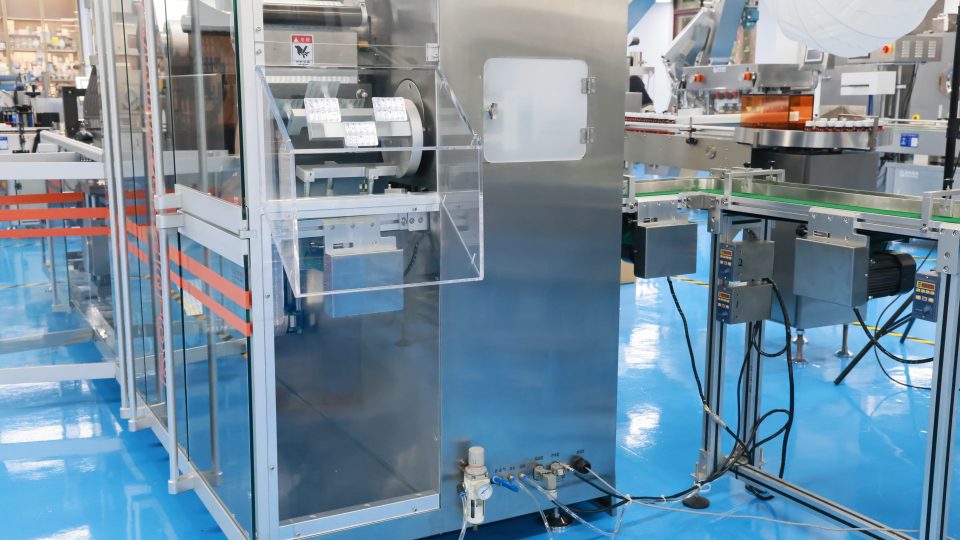
Stesen pemotongan acuan pengurangan sisa
Berikut adalah cadangan mudah berdasarkan persekitaran pengeluaran sebenar. Gunakannya sebagai titik permulaan untuk penilaian anda sendiri.
Untuk tablet, kaplet dan kapsul keras, mesin pembungkusan lepuh yang menawarkan keseimbangan kelajuan dan pematuhan GMP terbaik ialah reka bentuk plat penggelek. Siri DPH-270MAX Rich Packing, sebagai contoh, beroperasi pada kelajuan 200-400 lepuh seminit yang stabil dengan enam pemacu servo bebas untuk penyegerakan yang tepat. Perubahan acuan yang cepat (kurang daripada 10 minit) membolehkan satu barisan mengendalikan berbilang produk tanpa kehilangan satu anjakan penuh—kelebihan utama untuk mana-mana mesin pembungkusan lepuh farmaseutikal.
Tahap fleksibiliti ini adalah apa yang perlu dicari oleh pengeluar farmaseutikal semasa menilai mesin pembungkusan lepuh baharu.
Madu, sapuan coklat, krim kosmetik dan lepuh berisi cecair memerlukan sentuhan halus. Di sini, mesin pembungkusan lepuh plat rata adalah pilihan yang tepat. Gerakan sekejap-sekejap menghalang percikan, dan tekanan pengedap terkawal menghalang cecair daripada mencemari kawasan pengedap. Model DPP-270L Richpacking dibina khusus untuk aplikasi cecair dan separa pepejal ini, dengan permukaan keluli tahan karat yang mudah dibersihkan untuk memenuhi peraturan kebersihan yang ketat.
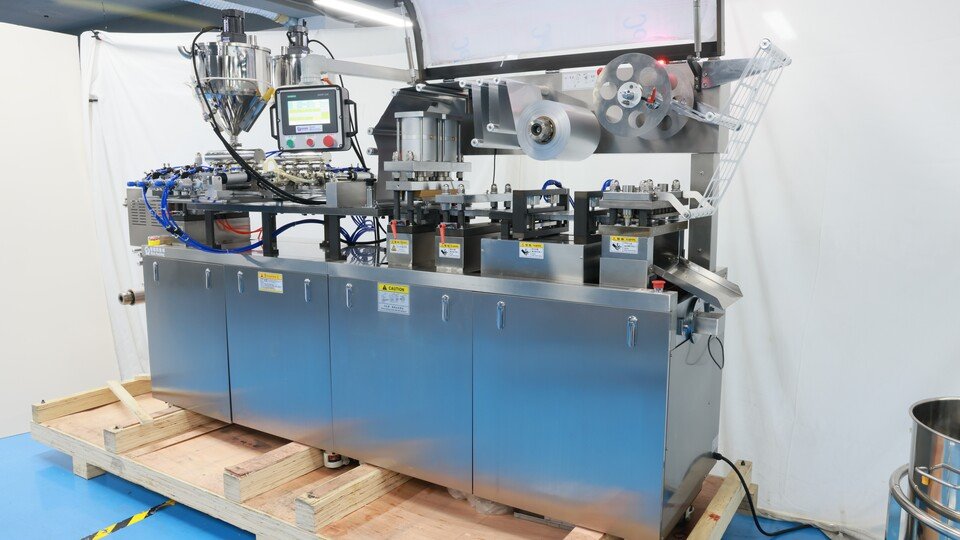
Mesin lepuh plastik aluminium cecair
Pembungkusan lepuh bukan sahaja untuk ubat-ubatan. Krimer kopi hidangan tunggal, dulang pembayang mata, bateri sel butang dan kit perkakasan semuanya dihantar dalam bentuk lepuh. Industri-industri ini sering menukar produk setiap hari, jadi pertukaran pantas dan fleksibiliti format adalah penting. Mesin pek lepuh plat penggelek dengan perkakasan modular, seperti platform DPH Rich packing, boleh bertukar daripada dulang krimer kopi 10 rongga kepada lepuh bateri 6 rongga dalam beberapa minit. Fleksibiliti ini membolehkan anda melayani berbilang pasaran dengan satu mesin.
Mesin pembungkusan lepuh yang betul menukarkan rangkaian pembungkusan yang mahal menjadi aset strategik untuk perniagaan anda. Mesin penggelek memberikan kelajuan untuk tablet isipadu jisim; mesin plat rata menawarkan ketepatan untuk bentuk kompleks dan kelompok kecil; teknologi plat penggelek menyatukan kedua-dua dunia dengan penggunaan tenaga dan pembaziran bahan yang lebih rendah.
Dengan memadankan teknologi dengan produk, keperluan output dan bajet jangka panjang anda, anda dapat mengelakkan kesilapan pemilihan yang paling biasa dan mahal. Mesin pembungkusan lepuh yang dipilih dengan teliti dapat membayarnya sendiri melalui masa operasi yang lebih tinggi dan pembaziran bahan yang lebih rendah.
Semasa anda menilai barisan pembungkusan lepuh anda yang seterusnya, pasukan kejuruteraan Rich Packing boleh memberikan penilaian yang disesuaikan untuk memadankan teknologi yang tepat dengan matlamat produk dan pengeluaran khusus anda.
[1] Output mesin penggelek melebihi 800 lepuh/min:
BioProcess Dalam Talian / Uhlmann. "Sistem Pembungkusan Lepuh Farmaseutikal." https://www.bioprocessonline.com/doc/pharmaceutical-blister-packaging-system-up-to-per-minute-be-0001
[2] Output plat rata sekitar 300 lepuh/min:
Teknologi Jicon. "Siri BLISTRIP-II." https://www.jicon.in/sites/default/files/2024-03/jicon.html
[3]Pembungkusan Kaya. "Mesin Pembungkusan Lepuh Kapsul Tablet Pil." https://www.richpacking020.com/pill-tablet-capsule-blister-packing-machine_p58.html
Richpacking. "Mesin Pembungkusan Lepuh DPP-270Max Tersuai:Pemeriksaan Akhir Sebelum Penghantaran."
S1: Jenis mesin pembungkusan lepuh yang manakah terbaik untuk syarikat farmaseutikal kecil dengan pelbagai produk?
Mesin pembungkusan lepuh plat bergulung adalah pilihan yang paling sesuai. Reka bentuk modularnya membolehkan penukaran acuan dalam masa kurang daripada 10 minit, membolehkan pengeluaran berbilang format yang cekap pada satu barisan. Untuk kelompok yang sangat kecil dengan keperluan tarikan dalam, mesin plat rata juga merupakan pilihan yang kukuh.
S2: Bolehkah mesin pembungkusan lepuh yang sama mengendalikan pembungkusan aluminium-plastik dan aluminium-aluminium?
Ya. Mesin pembungkusan lepuh plat penggelek dan plat rata boleh menjalankan kedua-dua jenis bahan dengan andal dengan tetapan suhu dan tekanan yang betul. Mesin penggelek penuh tradisional lebih terhad dan berfungsi paling baik dengan bahan berasaskan PVC standard.
S3: Bagaimanakah saya mengira perbezaan kos sebenar antara mesin penggelek, plat rata dan plat penggelek?
Tumpukan pada tiga pemacu jangka panjang: penggunaan tenaga, masa henti pertukaran acuan dan pembaziran bahan pembungkusan. Dalam tempoh lima tahun, penggunaan kuasa yang lebih rendah, pertukaran yang lebih pantas dan pengurangan pembaziran bahan mesin plat penggelek selalunya mengimbangi pelaburan awal yang lebih tinggi. Tanya pembekal anda untuk unjuran jumlah kos pemilikan berdasarkan campuran produk dan corak peralihan khusus anda.

29+ years in pharmaceutical machinery, covering capsule filling, tablet pressing, blister packaging, tablet and capsule counting, cartoning, GMP production, and overseas machine service.

E-mel : manager@richpacking.cn
Building D, No. 226, Beishan Qiaotou Street, Haizhu District, Guangzhou City, Guangdong Province, China


 Rangkaian IPv6 disokong