






 Rumah
Rumah Produk
Softgel Berbanding Kapsul Keras dalam Pengisian Kapsul Cecair: Mana Yang Sesuai untuk Produk Anda?
Kapsul berisi cecair semakin popular dalam industri farmaseutikal dan suplemen kesihatan. Berbanding kapsul tradisional berisi serbuk, formulasi cecair sering menawarkan bioavailabiliti yang lebih tinggi, keseragaman dos yang lebih baik, pelarutan yang lebih cepat, dan pematuhan pesakit yang dipertingkatkan. Ia amat sesuai untuk bahan aktif yang kurang larut dalam air, minyak, dan sistem penghantaran ubat pengemulsi kendiri (SEDDS).
Apabila membangunkan produk kapsul berisi cecair, pengeluar biasanya berdepan dengan keputusan penting: Adakah formulasi perlu diisi ke dalam softgel atau kapsul keras? Artikel ini bertujuan memberikan perbandingan menyeluruh antara softgel dan kapsul keras dalam teknologi pengisian cecair untuk membantu anda menentukan penyelesaian yang paling sesuai dengan produk anda.
1. Softgel berbanding Kapsul Keras: Apakah Perbezaannya?
Reka bentuk cangkerang kapsul menentukan bukan sahaja cara cecair dikapsulkan, tetapi juga peralatan yang boleh digunakan, cara proses pengedapan dilakukan, dan jenis formulasi yang boleh diisi. Perbezaan ini secara langsung mempengaruhi kecekapan pengeluaran, keserasian formulasi, dan pelaburan.
Oleh itu, memahami struktur kapsul dan prinsip pembuatan menyediakan asas untuk menilai proses pengisian kapsul cecair serta menentukan jenis formulasi cecair yang paling sesuai untuk setiap sistem kapsul.
1.1 Struktur Kapsul
Perbezaan paling ketara antara softgel dan kapsul keras terletak pada pembinaan dan bahan cangkerangnya.
Softgel ialah kapsul satu bahagian yang dimeterai secara hermetik dengan cangkerang lembut dan fleksibel. Semasa pembuatan, cangkerang dibentuk dan dimeterai mengelilingi isian cecair dalam satu operasi tunggal. Struktur tanpa sambungan ini memberikan ketahanan yang sangat baik terhadap kebocoran, kemasukan oksigen, dan penembusan kelembapan.
Secara tradisional, cangkerang softgel dibuat daripada gelatin, air, dan pemplastik seperti gliserin atau sorbitol, yang memberikan keanjalan kepada cangkerang. Untuk memenuhi keperluan vegetarian, vegan, atau keagamaan, pengeluar juga telah membangunkan softgel tanpa gelatin menggunakan polimer berasaskan tumbuhan seperti kanji terubah suai atau karagenan.
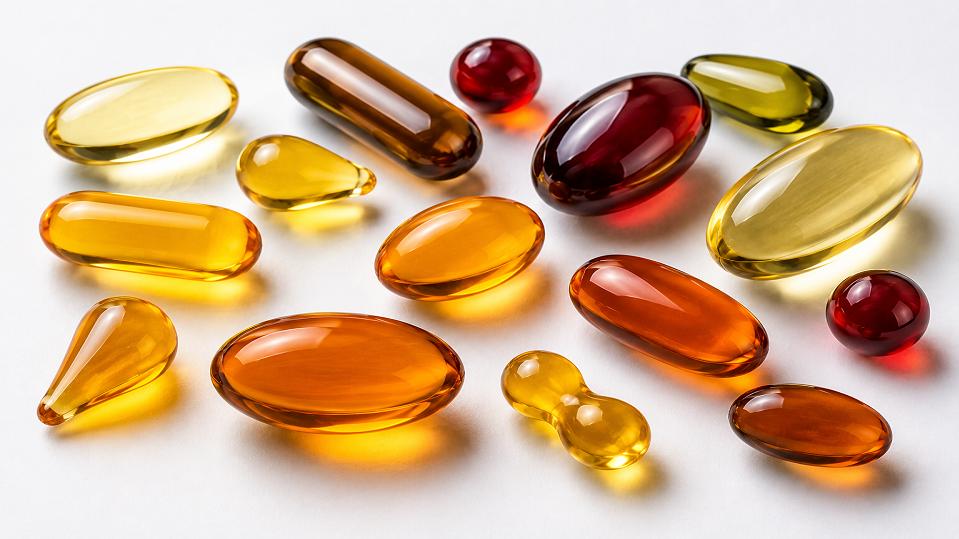 Softgel
Sebaliknya, kapsul keras terdiri daripada dua komponen berasingan—badan kapsul dan penutup kapsul. Kapsul kosong dihasilkan terlebih dahulu, dan formulasi cecair diisi ke dalam badan kapsul sebelum penutup dikunci dan dimeterai. Oleh sebab cangkerang mempunyai sambungan semula jadi antara penutup dan badan, proses pengedapan tambahan biasanya diperlukan untuk aplikasi berisi cecair bagi mengelakkan kebocoran semasa penyimpanan dan pengangkutan.
Cangkerang kapsul keras secara tradisional dibuat daripada gelatin, tetapi kapsul HPMC (hidroksipropil metilselulosa) dan pullulan semakin popular dalam beberapa tahun kebelakangan ini. Bahan berasaskan tumbuhan ini menawarkan kelebihan seperti sensitiviti kelembapan yang lebih rendah dan digunakan secara meluas untuk produk vegetarian atau formulasi sensitif terhadap kelembapan.
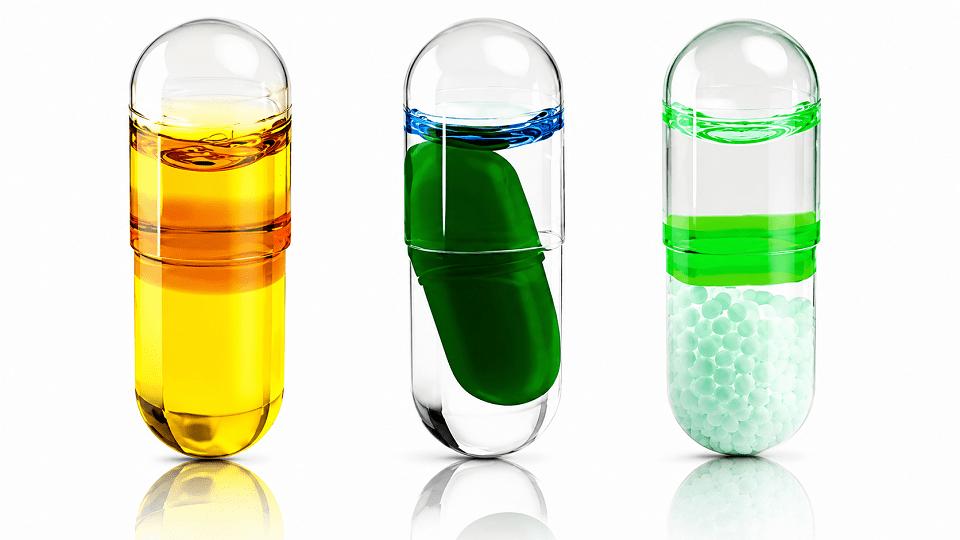
| Softgel | Kapsul Keras | |
|---|---|---|
| Struktur kapsul | Kapsul satu bahagian tanpa sambungan | Kapsul dua bahagian (badan & penutup) |
| Bahan cangkerang biasa | Gelatin; kanji terubah suai atau karagenan (vegetarian) | Gelatin, HPMC, Pullulan |
| Ciri-ciri cangkerang | Lembut, fleksibel dan elastik | Tegar atau separa tegar |
| Pengedapan | Disepadukan semasa pengkapsulan | Pengedapan tambahan diperlukan |
| Ketahanan terhadap kebocoran | Cemerlang | Bergantung pada kualiti pengedapan |
1.2 Prinsip Pembuatan
Softgel dihasilkan menggunakan proses Pengkapsulan Die Putar, yang menggabungkan pembentukan kapsul, pengisian cecair, dan pengedapan dalam satu operasi berterusan. Semasa pengeluaran, gelatin cair dibentuk menjadi dua jalur berterusan yang dipandu ke dalam penggelek die berputar. Apabila ruang die ditutup, pam pemeteran menyuntik isipadu cecair yang dikawal dengan tepat di antara jalur gelatin. Die berputar kemudian secara serentak membentuk, mengedap, dan memotong kapsul individu, menghasilkan softgel yang dimeterai secara hermetik dalam satu langkah.
Sebaliknya, kapsul keras mengikuti pendekatan pembuatan dua peringkat. Cangkerang kapsul kosong dihasilkan secara berasingan dan dibekalkan sebagai kapsul dua bahagian siap. Semasa pengisian cecair, badan dan penutup kapsul dipisahkan terlebih dahulu, formulasi cecair didoskan ke dalam badan kapsul, dan kapsul kemudian ditutup serta dikunci. Oleh sebab sambungan semula jadi kekal antara penutup dan badan, operasi pengedapan tambahan biasanya diperlukan untuk mengelakkan kebocoran.
2. Bagaimanakah Pengisian Kapsul Cecair Dicapai dalam Softgel dan Kapsul Keras?
Disebabkan perbezaan struktur antara softgel dan kapsul keras, proses pengisian kapsul cecair berbeza dengan ketara. Pembuatan softgel bergantung pada mesin pengkapsulan softgel yang dilengkapi sistem pembentukan jalur gelatin, die berputar, dan baji suntikan. Kapsul keras berisi cecair dihasilkan menggunakan mesin pengisian dan pengedapan kapsul cecair, yang menggabungkan pendosaan cecair berketepatan tinggi dengan teknologi penutupan dan pengedapan kapsul.
Memahami cara kedua-dua mesin ini beroperasi membantu pengeluar memilih teknologi yang paling sesuai untuk keperluan pengeluaran mereka.
2.1 Mesin Pengkapsulan Softgel
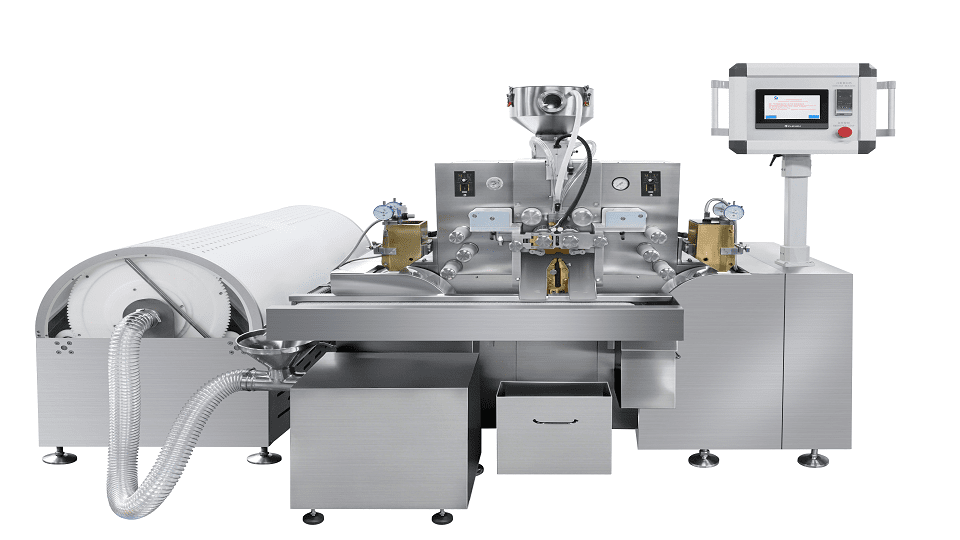
Pengisian cecair softgel dilakukan menggunakan mesin pengkapsulan softgel, yang biasanya berasaskan proses Pengkapsulan Acuan Putar. Berbeza daripada mesin pengisian kapsul, mesin ini tidak mengisi kapsul yang telah siap dibuat. Sebaliknya, ia menghasilkan cangkerang kapsul, menyuntik cecair, dan mengedap setiap kapsul dalam proses bersepadu sepenuhnya.
Proses pengkapsulan boleh dibahagikan kepada peringkat berikut.
Langkah 1. Penyediaan Gelatin
Proses bermula dengan penyediaan jisim gelatin. Gelatin dicampurkan dengan air tulen, pemplastik seperti gliserin atau sorbitol, serta pewarna atau bahan legap pilihan dalam tangki peleburan yang dipanaskan. Campuran tersebut dinyahudara secara vakum untuk mengeluarkan gelembung udara terperangkap dan dikekalkan pada suhu terkawal bagi memastikan kelikatan stabil sebelum pengkapsulan. Pada masa yang sama, cecair disediakan dalam tangki pegangan berasingan dan dikekalkan homogen melalui pencampuran atau pemanasan lembut jika diperlukan.
Langkah 2. Pembentukan Jalur Gelatin
Gelatin cair mengalir dari tangki ke kotak penyebar, di mana ia diagihkan secara sekata pada dua dram berputar besar yang disejukkan air. Apabila dram berputar, gelatin cepat menyejuk dan memejal menjadi dua jalur berterusan dengan ketebalan yang dikawal tepat. Udara penyejuk dan suhu dikawal dengan teliti untuk mengekalkan keseragaman jalur, kerana variasi ketebalan boleh memberi kesan langsung terhadap kekuatan kapsul, kualiti pengedapan, dan penampilan.
Langkah 3. Penjajaran Jalur
Selepas meninggalkan dram penyejuk, dua jalur gelatin bergerak melalui beberapa penggelek panduan ke arah zon pengkapsulan. Sebelum mencapai acuan putar, lapisan pelincir gred makanan yang sangat nipis disapu pada jalur untuk mengelakkan lekatan pada komponen logam semasa pengangkutan dan pengedapan. Kedua-dua jalur kemudian bertemu dari sisi bertentangan mesin dengan penjajaran tepat, sebagai persediaan untuk pembentukan kapsul.
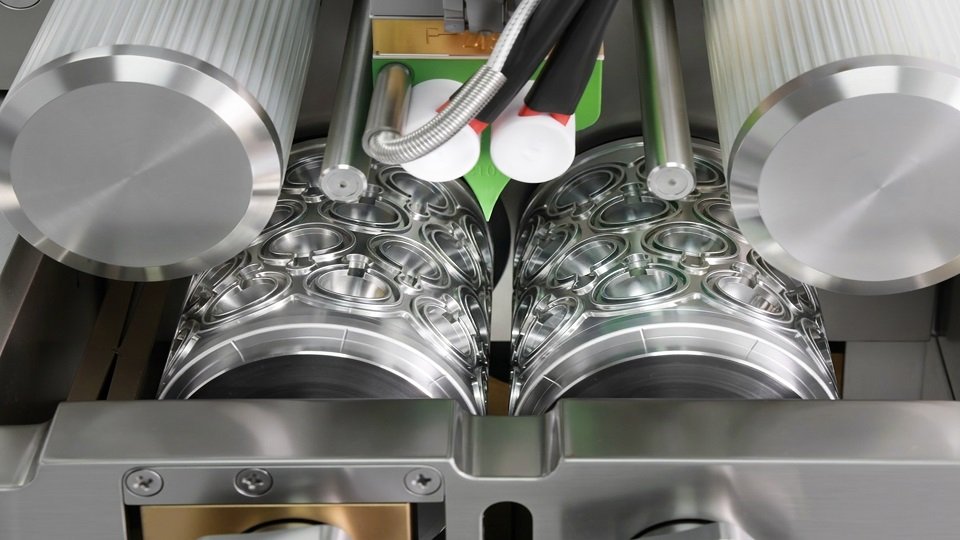
Langkah 4. Suntikan Pengisian Tepat
Di tengah mesin terdapat baji suntikan, salah satu komponen paling kritikal dalam sistem pengkapsulan softgel. Pam pemeteran berketepatan tinggi menghantar formulasi cecair secara berterusan melalui saluran di dalam baji yang dipanaskan. Apabila dua jalur gelatin melalui kedua-dua sisi baji, isipadu cecair yang diukur dengan tepat disuntik di antara kedua-duanya. Tekanan yang terhasil semasa suntikan menyebabkan jalur gelatin mengembang ke dalam rongga acuan putar, memastikan isipadu pengisian tepat dan keseragaman kandungan yang sangat baik.
Langkah 5. Pembentukan, Pengedapan dan Pemotongan Kapsul
Sejurus selepas suntikan, jalur gelatin berisi memasuki bahagian acuan putar. Dua acuan berputar bertentangan mengandungi rongga berbentuk kapsul yang dimesin dengan tepat. Apabila poket acuan yang sepadan tertutup bersama, haba dan tekanan secara serentak membentuk kapsul, mengedap kedua-dua jalur gelatin secara hermetik mengelilingi cecair, dan memotong kapsul siap daripada jaringan gelatin di sekelilingnya.
Langkah 6. Pelepasan Kapsul
Selepas meninggalkan acuan putar, penggelek penanggal memisahkan softgel yang baru terbentuk daripada lebihan jalur gelatin dengan lembut. Kapsul dilepaskan ke sistem penghantar, manakala jaringan gelatin yang tinggal dikumpulkan untuk dikitar semula atau dilupuskan mengikut proses pengeluaran. Pada peringkat ini, kapsul telah tertutup sepenuhnya tetapi masih lembut kerana kandungan kelembapannya yang agak tinggi.
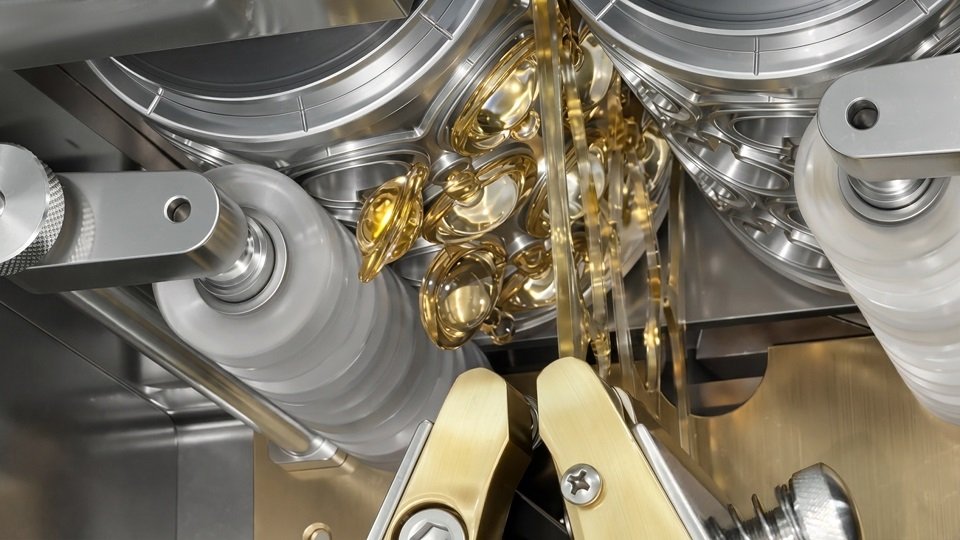
Pelepasan Softgel
Langkah 7. Pengeringan
Softgel segar menjalani proses pengeringan dua peringkat. Mula-mula, ia dipindahkan ke dalam pengering berputar, di mana putaran lembut digabungkan dengan aliran udara berisipadu tinggi untuk mengeluarkan kelembapan permukaan dan mengelakkan kapsul melekat antara satu sama lain. Kapsul kemudian disebarkan pada dulang pengeringan atau dipindahkan ke terowong atau bilik pengeringan terkawal, di mana suhu, kelembapan, dan aliran udara dikawal sehingga cangkerang mencapai kandungan lembapan akhir dan kekuatan mekanikalnya.
2.2 Mesin Pengisian dan Pengedapan Kapsul Cecair
Berbeza daripada pembuatan softgel, mesin pengisian dan pengedapan kapsul cecair tidak menghasilkan cangkerang kapsul itu sendiri. Sebaliknya, ia mengisi formulasi cecair ke dalam kapsul keras yang telah dibuat dan kemudian mengedap sambungan kapsul untuk mengelakkan kebocoran.
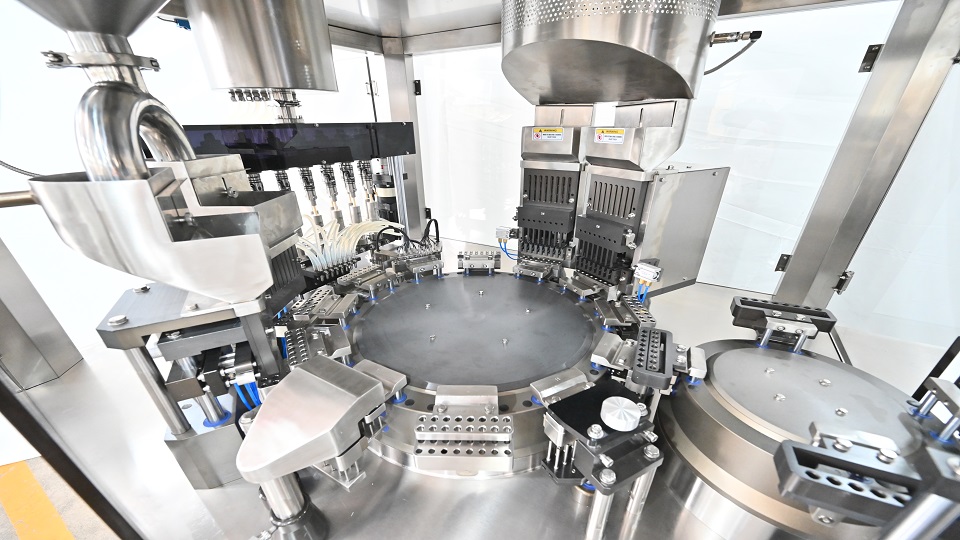 Mesin Pengisian Kapsul Cecair NJY-1000Cdaripada Rich Packing
Proses pengisian dan pengedapan kapsul cecair biasa merangkumi peringkat berikut.
Langkah 1. Pengisian dan Pemisahan Kapsul
Proses bermula dengan pengisian kapsul secara automatik. Kapsul kosong dimasukkan ke dalam corong dan disusun orientasinya sebelum memasuki mesin pengisian kapsul. Sistem pemisahan vakum kemudian memisahkan penutup kapsul daripada badan kapsul sambil memastikan kedua-dua bahagian berada dalam kedudukan tepat pada pemegang khusus.
Bergantung pada bahan kapsul, seperti gelatin, HPMC, atau pullulan, daya pemisahan dan tahap vakum dikawal dengan teliti untuk mengelakkan perubahan bentuk atau kerosakan kapsul sambil mengekalkan operasi berkelajuan tinggi yang stabil.
Langkah 2. Pemeriksaan dan Penolakan Kapsul
Sebelum kapsul meneruskan ke pengisian cecair, banyak mesin pengisian kapsul cecair menggabungkan stesen pemeriksaan dan penolakan automatik.
Sensor memantau parameter pengeluaran utama seperti
- Badan kapsul yang hilang
- Penutup kapsul yang hilang
- Pemisahan kapsul yang tidak betul
Mana-mana kapsul rosak akan ditolak secara automatik sebelum memasuki proses pengedapan seterusnya. Penolakan awal ini bukan sahaja meningkatkan kualiti produk akhir tetapi juga menghalang pencemaran pelekat pengedap dan mengurangkan pembaziran bahan yang tidak diperlukan.
Langkah 3. Pengisian Cecair Tepat
Selepas pemeriksaan, badan kapsul bergerak ke stesen pengisian. Formulasi cecair dibekalkan daripada corong terkawal suhu untuk mengekalkan kelikatan stabil sepanjang pengeluaran. Mengikut ciri-ciri formulasi, mesin mungkin dilengkapi dengan:
- Pam omboh seramik untuk dos isipadu berketepatan tinggi
- Pam peristaltik untuk formulasi steril atau sensitif
- Pam pemeteran dipacu servo untuk pengeluaran berkelajuan tinggi
Setiap muncung pengisian menyalurkan isipadu cecair yang dikawal tepat ke dalam badan kapsul. Penyegerakan antara pengindeksan kapsul dan pergerakan pam memastikan ketepatan berat pengisian yang sangat baik sambil mengelakkan titisan atau pencemaran di sekitar bibir kapsul.
Langkah 4. Penguncian Kapsul
Penutup kapsul diposisikan semula dengan tepat pada badan kapsul yang telah diisi. Mekanisme penguncian kemudian menekan kedua-dua bahagian kapsul bersama sehingga gelang pengunci bercantum dengan kukuh. Pada tahap ini, kapsul mempunyai kekuatan mekanikal yang mencukupi untuk pengendalian, tetapi sambungan antara penutup dan badan kapsul masih belum sepenuhnya kedap cecair, terutamanya untuk formulasi berasaskan minyak atau berkelikatan rendah.
Langkah 5. Pengedapan Kapsul
Kapsul yang telah dikunci memasuki stesen pengedapan, di mana larutan pengedap berasaskan gelatin (atau larutan pengedap berasaskan HPMC untuk kapsul vegetarian) disapukan secara sekata di sekeliling sambungan antara penutup kapsul dan badan kapsul.
Larutan pengedap dikekalkan pada suhu tinggi, biasanya 40–60°C, bagi memastikan kelikatan yang sesuai dan pembasahan permukaan kapsul yang baik. Apabila kapsul berputar melalui stesen pengedapan, jalur nipis larutan pengedap suam yang berterusan mengelilingi sepenuhnya jahitan kapsul, mengisi jurang mikroskopik antara dua bahagian cangkerang dan membentuk gelang pengedap berterusan selepas pengeringan.
Langkah 6. Pengeringan Udara
Sejurus selepas pengedapan, jalur gelatin masih mengandungi jumlah kelembapan yang agak tinggi dan belum mencapai kekuatan mekanikal akhirnya. Oleh itu, kapsul memasuki sistem pengeringan udara paksa, di mana aliran udara, suhu dan kelembapan yang dikawal dengan teliti mempercepat penyejatan kelembapan daripada jalur pengedap tanpa memanaskan kandungan kapsul secara berlebihan.
Mesin Pengisian Kapsul Cecair NYJ-330C daripada Rich Packing
3. Memilih Kapsul yang Tepat untuk Mesin Pengedap
Pemilihan kapsul yang sesuai bergantung terutamanya pada ciri fizikal dan kimia formulasi cecair.
Pertimbangan penting termasuk:
- Kelikatan
- Kemeruapan
- Kepekaan terhadap pengoksidaan
- Kepekaan terhadap kelembapan
- Kestabilan terma
- Keperluan ketepatan pengisian
- Jangkaan jangka hayat
3.1 Cecair yang Sesuai untuk Kapsul Lembut
Kapsul lembut boleh menampung pelbagai jenis formulasi cecair dan separa pepejal. Formulasi biasa termasuk:
- Minyak ikan
- Minyak Omega-3
- Vitamin E
- Minyak tumbuhan
- Suspensi yang mengandungi zarah halus
- Pes separa pepejal
- Gel berkelikatan tinggi
- Sistem penghantaran ubat pengemulsi sendiri (SEDDS)
Oleh sebab kapsul lembut dimeterai serta-merta semasa enkapsulasi, ia amat sesuai untuk:
- Formulasi yang sensitif terhadap oksigen
- Minyak yang mudah teroksida
- Bahan yang sangat mudah meruap
- Formulasi yang sensitif terhadap kelembapan
- Bahan berkelikatan tinggi
- Formulasi yang memerlukan perlindungan kebocoran yang sangat baik
3.2 Cecair yang Sesuai untuk Kapsul Keras
Kapsul keras berisi cecair biasanya lebih sesuai untuk formulasi dengan kelikatan sederhana dan kebolehaliran yang baik. Formulasi biasa termasuk:
- Minyak berkelikatan sederhana dan rendah
- Nutraseutikal cecair
- Formulasi berasaskan PEG
- Formulasi lipid cair
- Formulasi lilin cair
- Sistem pengemulsian sendiri (SEDDS/SMEDDS)
- Larutan farmaseutikal
4. Senario Pengeluaran untuk Dua Jenis Pengisian Kapsul Cecair
| Keperluan Pengeluaran | Pengisian Cecair Softgel | Pengisian Cecair Kapsul Keras |
|---|---|---|
| Pengeluaran berskala besar | Paling sesuai untuk pembuatan berterusan dengan jumlah pengeluaran tinggi. | Sesuai untuk pengeluaran berskala sederhana tetapi secara amnya kurang cekap berbanding pengkapsulan softgel berterusan untuk jumlah yang sangat besar. |
| Pengeluaran kelompok kecil atau perintis | Kurang ekonomik disebabkan oleh penyediaan peralatan yang mengambil masa lama, penyediaan gelatin, dan prosedur pembersihan. | Ideal untuk kelompok perintis dan pembuatan kecil kerana pengeluaran boleh dimulakan menggunakan cangkerang kapsul yang telah dihasilkan terlebih dahulu dengan penyediaan minimum. |
| Penyelidikan & pembangunan formulasi | Lebih sesuai selepas formulasi dimuktamadkan kerana pengoptimuman proses dan perkakasan memerlukan masa tambahan. | Diutamakan semasa pembangunan formulasi, pengesahan proses, dan kajian klinikal berkat pertukaran produk yang pantas serta kos pembangunan yang lebih rendah. |
| Pertukaran produk yang kerap | Pertukaran produk agak memakan masa disebabkan oleh keperluan penyediaan gelatin, pembersihan, dan pengeringan. | Sangat sesuai untuk pembuatan pelbagai produk. Formulasi dan saiz kapsul yang berbeza boleh ditukar dengan masa henti yang agak sedikit. |
| Pelaburan peralatan yang terhad | Memerlukan barisan pengeluaran softgel khusus, termasuk penyediaan gelatin, pengkapsulan, pengeringan berputar, dan bilik pengeringan, yang menyebabkan pelaburan modal awal lebih tinggi. | Mesin pengisian kapsul automatik sedia ada selalunya boleh dinaik taraf dengan modul pendos cecair dan pengedapan, sekali gus mengurangkan kos pelaburan dengan ketara. |
| Keupayaan pembuatan sedia ada | Paling sesuai untuk pengilang yang sudah mengendalikan kemudahan pengeluaran softgel khusus. | Penyelesaian praktikal untuk pengilang yang sudah memiliki mesin pengisian kapsul automatik dan ingin mengembangkan kepada formulasi cecair tanpa melabur dalam barisan pengeluaran baharu sepenuhnya. |
Untuk gambaran keseluruhan peringkat stesen yang lebih luas bagi pengeluaran kapsul keras, lihat panduan prinsip kerja mesin pengisian kapsul ini.
Untuk projek kapsul keras berisi cecair kelompok kecil, bandingkan Mesin Pengisian Kapsul Cecair CGN-208L.
Pemilihan antara softgel dan kapsul keras dalam pengisian kapsul cecair tidak ditentukan semata-mata oleh formulasi itu sendiri. Pengilang juga harus mempertimbangkan skala pengeluaran, peringkat pembangunan, ketersediaan peralatan, bajet pelaburan, dan strategi pengkomersialan.
5. Kesimpulan
Secara umum, pengkapsulan softgel kekal sebagai penyelesaian pilihan untuk pembuatan komersial berskala besar, khususnya bagi formulasi berasaskan minyak, cecair berkelikatan tinggi, dan produk yang memerlukan prestasi pengedapan unggul, perlindungan kelembapan dan oksigen yang sangat baik, serta penampilan yang menarik.
Kapsul keras berisi cecair, sebaliknya, menawarkan fleksibiliti pembuatan yang lebih tinggi. Dengan menggabungkan pendos cecair berketepatan tinggi dengan teknologi pengedapan kapsul, ia membolehkan pengilang menghasilkan pelbagai jenis formulasi cecair. Ini menjadikannya sangat sesuai untuk R&D, ujian klinikal, pengeluaran perintis, pembuatan berskala kecil hingga sederhana, dan kemudahan yang kerap menukar antara produk atau formulasi.
Akhirnya, tiada teknologi “terbaik” yang universal, hanya teknologi yang paling sepadan dengan formulasi dan strategi pembuatan anda. Memahami perbezaan dalam struktur kapsul, proses pengeluaran, keserasian formulasi, dan senario aplikasi membolehkan pengilang membuat keputusan termaklum yang meningkatkan kualiti produk, kecekapan pengeluaran, dan pulangan pelaburan jangka panjang. Apabila bentuk dos cecair terus mendapat populariti dalam pasaran farmaseutikal dan nutraseutikal, pemilihan teknologi kapsul yang tepat akan kekal sebagai faktor utama dalam mencapai pengeluaran yang boleh dipercayai, cekap, dan berdaya saing.
6. Soalan Lazim
1. Bolehkah kapsul keras diisi dengan cecair?
Ya. Kapsul keras berisi cecair direka khusus untuk minyak, ekstrak herba, formulasi lipid, dan produk cecair atau separa cecair lain. Selepas pengisian, kapsul tersebut dimeterai menggunakan teknologi seperti pengedapan jalur untuk mencegah kebocoran.
2. Apakah jenis cecair yang sesuai untuk softgel?
Softgel amat sesuai untuk minyak, cecair berkelikatan tinggi, bahan separa pepejal, ampaian, dan formulasi yang sensitif terhadap oksigen atau kelembapan. Struktur hermetik satu kepingnya memberikan perlindungan yang sangat baik terhadap kebocoran dan pengoksidaan.
3. Bolehkah cecair sensitif haba diisi ke dalam kapsul keras?
Ya. Kebanyakan kapsul keras berisi cecair dimeterai dengan jalur pengedap gelatin atau HPMC suam yang hanya digunakan pada jahitan kapsul, sekali gus meminimumkan pendedahan haba kepada formulasi. Walau bagaimanapun, bahan yang sangat sensitif terhadap haba hendaklah sentiasa dinilai melalui ujian keserasian sebelum pengeluaran.
4. Adakah kapsul keras berisi cecair memerlukan pengedapan tambahan?
Ya. Tidak seperti softgel, kapsul keras terdiri daripada dua bahagian cangkerang yang berasingan, jadi proses pengedapan tambahan diperlukan selepas pengisian. Ini meningkatkan ketahanan terhadap kebocoran, kestabilan produk, dan jangka hayat.
5. Adakah mesin enkapsulasi softgel sama dengan mesin pengisian kapsul cecair?
Tidak. Mesin enkapsulasi softgel membentuk, mengisi, dan mengedap kapsul dalam satu proses berterusan. Mesin pengisian kapsul cecair pula mengisi kapsul keras yang telah dibuat terlebih dahulu dan kemudian menutup, mengedap, serta mengeringkannya dalam peringkat pengeluaran yang berasingan.

 Rangkaian IPv6 disokong