






 Rumah
Rumah Produk
29+ years in pharmaceutical machinery, covering capsule filling, tablet pressing, blister packaging, tablet and capsule counting, cartoning, GMP production, and overseas machine service.

Membeli mesin pembungkusan farmaseutikal ialah pelaburan jangka panjang yang secara langsung mempengaruhi kecekapan pengeluaran, kualiti produk, dan kos operasi. Sama ada anda melabur dalam mesin pengira tablet, mesin pengisi kapsul, mesin pembungkusan lepuh, atau barisan pembungkusan lengkap, pilihan yang baik boleh meningkatkan prestasi pembuatan anda dengan ketara untuk tahun-tahun akan datang.
Semasa proses pembelian, kebanyakan pembeli secara semula jadi memberi tumpuan kepada spesifikasi seperti kelajuan pengeluaran, tahap automasi, dan harga. Faktor-faktor ini sememangnya penting kerana ia menentukan sama ada mesin tersebut dapat memenuhi matlamat pengeluaran semasa.
Walau bagaimanapun, masa henti yang kerap, prosedur pembersihan yang sukar, proses pertukaran yang rumit, pertukaran, alat ganti yang lewat, dan isu penyelenggaraan yang tidak dijangka sering menjadi halangan sebenar kepada pengeluaran yang cekap. Faktor tersembunyi ini boleh mengurangkan ketersediaan, dan akhirnya menurunkan pulangan pelaburan.
Panduan pembelian ini bertujuan untuk mengkaji faktor umum yang perlu dinilai oleh pembeli ketika memilih mesin pembungkusan farmaseutikal dan meneroka lima pertimbangan yang sering diabaikan yang boleh membawa perbezaan ketara.
Apabila membeli mesin farmaseutikal, pembeli biasanya terlebih dahulu menilai beberapa faktor asas, termasuk keperluan pengeluaran, keserasian produk, kapasiti pengeluaran, pematuhan peraturan, dan jumlah kos pelaburan. Pertimbangan asas ini membentuk asas kepada keputusan pembelian yang berjaya.
Sebelum membandingkan spesifikasi atau harga mesin, soalan pertama yang perlu ditanya oleh setiap pembeli ialah sama ada mesin tersebut sepadan dengan keperluan pengeluaran yang dimaksudkan. Produk yang berbeza memerlukan konfigurasi mesin yang berbeza. Memilih mesin yang direka khusus untuk produk anda ialah asas kepada pengeluaran yang boleh dipercayai.
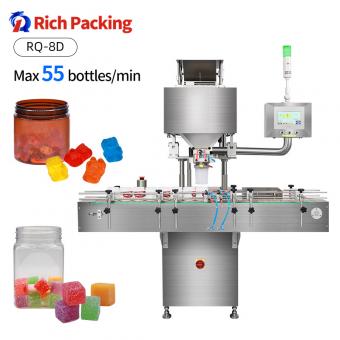
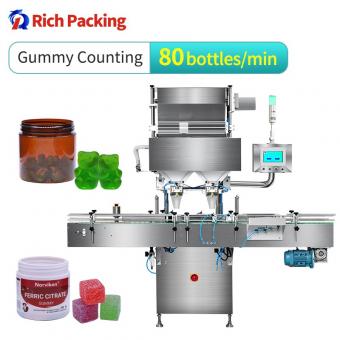
Ambil mesin pengira tablet sebagai contoh. Mesin pengira tablet standard direka untuk mengira tablet atau kapsul. Walau bagaimanapun, jika produk anda ialah gula-gula kenyal, mesin pengira tablet standard mungkin tidak sesuai. Gula-gula kenyal lebih lembut, melekit, dan sering mempunyai bentuk yang tidak sekata, memerlukan sistem suapan yang dioptimumkan serta reka bentuk anti-melekat. Oleh itu, yang perlu anda pilih ialah mesin pengira gula-gula kenyal.
Ringkasnya, mesin terbaik tidak semestinya yang paling pantas atau paling mahal, tetapi yang paling sesuai dengan keperluan pengeluaran anda.
Apabila membeli mesin pembungkusan farmaseutikal, pembeli juga perlu mengambil kira keserasian produk.
Produk mempunyai ciri-ciri yang berbeza. Serbuk mungkin mempunyai kebolehaliran yang rendah, dan formulasi tertentu mungkin melekit atau sangat kasar. Mesin yang berfungsi dengan sempurna untuk satu produk mungkin menghadapi kesukaran dengan produk lain jika sistem suapan, penghantaran, atau pembungkusan tidak direka dengan betul.
Sebagai contoh, bagi serbuk yang sangat melekit, mesin pengisi kapsul separa automatik lebih sesuai berbanding pengisi kapsul automatik sepenuhnya. Bahan melekit boleh melekat pada komponen dos, menyebabkan berat pengisian tidak konsisten atau gangguan pengeluaran pada mesin pengisi kapsul automatik. Pengisi kapsul separa automatik membolehkan pengendali memantau dan melaraskan proses pengisian dengan lebih mudah, menjadikannya penyelesaian praktikal untuk bahan yang mencabar ini.
Pembeli harus mengesahkan sama ada pembekal mempunyai pengalaman mengendalikan produk yang serupa dan sama ada penyelesaian tersuai tersedia untuk bahan yang mencabar. Memilih mesin pembungkusan farmaseutikal berdasarkan ciri produk sebenar, bukannya hanya spesifikasi umum, boleh meningkatkan kestabilan pengeluaran dan kualiti produk dengan ketara.
Mesin Pengisi Kapsul Separa Automatik Rich Packing
Kapasiti pengeluaran ialah salah satu spesifikasi pertama yang dibandingkan oleh pembeli, tetapi ia harus sentiasa dinilai dalam konteks keadaan pengeluaran sebenar dan bukannya bergantung semata-mata pada angka yang disenaraikan dalam risalah produk. Output yang ditunjukkan dalam spesifikasi diukur di bawah keadaan ujian tertentu. Dalam pengeluaran sebenar, kapasiti sebenar boleh berubah dengan ketara bergantung pada ciri produk dan format pembungkusan.
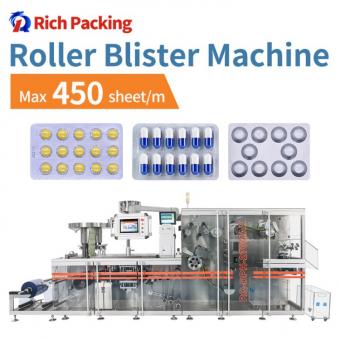
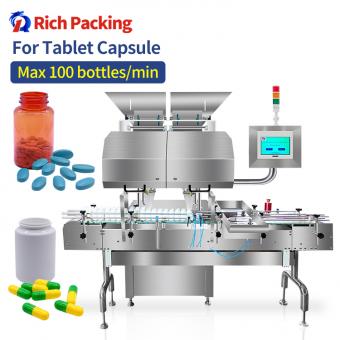
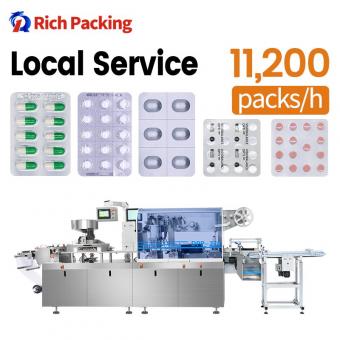
Sebagai contoh, kapasiti mesin pengira tablet atau kapsul berkait rapat dengan kuantiti produk yang diisi ke dalam setiap botol. Mesin yang mengisi 30 kapsul setiap botol boleh mencapai kadar yang jauh lebih tinggi berbanding mesin yang sama mengisi 300 kapsul setiap botol. Begitu juga, kapasiti mesin pembungkusan lepuh bergantung pada saiz dan susun atur pek lepuh. Pek lepuh yang lebih besar memerlukan masa pemprosesan yang lebih lama, menghasilkan kadar output yang berbeza berbanding pek lepuh yang lebih kecil.
Atas sebab ini, menyediakan maklumat seperti dimensi produk, spesifikasi pembungkusan, kuantiti pengisian, dan matlamat pengeluaran yang diingini membolehkan pembeli mencari konfigurasi mesin yang paling sesuai dengan anggaran kapasiti pengeluaran yang lebih realistik.
Mesin pembungkusan farmaseutikal mesti mematuhi peraturan industri sambil mengekalkan kualiti pembuatan yang konsisten. Faktor seperti reka bentuk yang mematuhi GMP, bahan sentuhan bertaraf makanan, komponen elektrik berkualiti tinggi, dan pengesahan sijil yang boleh dipercayai semuanya menyumbang kepada prestasi peralatan jangka panjang.
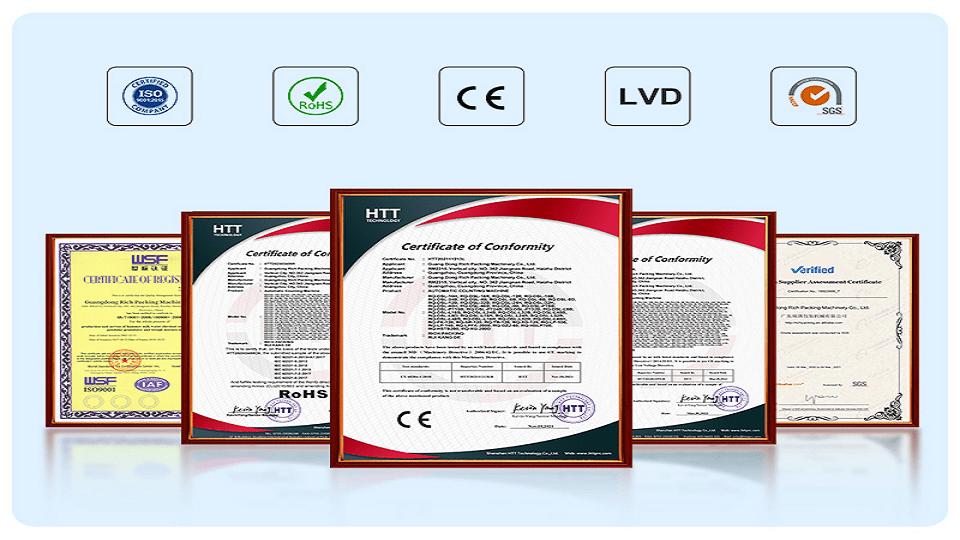
Sijil Rich Packing
Mesin yang direka dengan struktur yang bersih dan bersih bukan sahaja menyokong pematuhan peraturan tetapi juga mengurangkan risiko pencemaran semasa pengeluaran. Memilih mesin yang dibina dengan komponen yang diiktiraf di peringkat antarabangsa juga boleh meningkatkan kebolehpercayaan dan memudahkan penyelenggaraan pada masa hadapan.
Kos sebenar mesin pembungkusan farmaseutikal merangkumi keseluruhan hayat perkhidmatannya dan termasuk perbelanjaan penyelenggaraan, alat ganti, kos buruh, penggunaan tenaga, dan masa henti pengeluaran.
Mesin dengan harga yang lebih rendah mungkin pada mulanya kelihatan menarik tetapi boleh menyebabkan kos operasi yang lebih tinggi jika ia memerlukan pembaikan yang kerap atau mengalami kebolehpercayaan yang rendah. Oleh itu, adalah disyorkan untuk mengambil kira jumlah kos pemilikan (TCO) bagi membuat keputusan pelaburan yang lebih termaklum.
Walaupun faktor yang dibincangkan di atas adalah penting semasa pemilihan peralatan, faktor tersebut hanyalah sebahagian daripada proses pembelian. Pada hakikatnya, nilai sebenar mesin pembungkusan farmaseutikal ditunjukkan melalui kebolehpercayaan jangka panjang, kecekapan penyelenggaraan, dan kestabilan pengeluaran keseluruhan. Aspek-aspek ini mungkin tidak selalu muncul dalam risalah produk, namun ia boleh mempengaruhi produktiviti, kos operasi, dan pulangan pelaburan dengan ketara.
Risalah produk sering menonjolkan kelajuan maksimum, tetapi angka ini biasanya mewakili keadaan operasi ideal dan bukannya prestasi sebenar. Mesin yang mampu mencapai kelajuan tinggi selama beberapa minit kurang bernilai berbanding mesin yang boleh mengekalkan prestasi stabil sepanjang keseluruhan syif pengeluaran.
Kestabilan pengeluaran berterusan secara langsung mempengaruhi konsistensi produk dan perancangan pengeluaran. Pemberhentian yang kerap disebabkan oleh pemanasan melampau, kehausan mekanikal, kegagalan sensor, atau sistem suapan yang tidak stabil boleh mengurangkan produktiviti keseluruhan dengan cepat.
Apabila membeli mesin pembungkusan farmaseutikal, pembeli harus memberi tumpuan kepada laporan ujian operasi berterusan, ujian ketahanan di bawah keadaan beban penuh, Keberkesanan Keseluruhan Peralatan (OEE), dan data pengeluaran pelanggan sebenar untuk mendapatkan maklumat yang lebih bermakna berbanding kelajuan maksimum sahaja.
Pembersihan dan penyelenggaraan ialah tugas harian dalam pengeluaran farmaseutikalnamun perkara ini sering diabaikan semasa pemilihan mesin. Mesin dengan struktur yang rumit atau komponen yang sukar dicapai memerlukan masa henti yang lebih lama, serta risiko pembersihan yang tidak sempurna yang lebih tinggi. Lama-kelamaan, kos tersembunyi ini terkumpul dan mengurangkan kecekapan keseluruhan.
Mesin yang direka dengan baik harus membolehkan pengendali menanggalkan bahagian yang bersentuhan dengan produk dengan cepat, menjalankan pemeriksaan rutin, dan menyelesaikan pembersihan tanpa prosedur yang rumit. Pembongkaran tanpa alat, sudut mati yang diminimumkan, dan akses mudah ke titik penyelenggaraan semuanya menyumbang kepada pembersihan yang lebih pantas dan mengurangkan usaha penyelenggaraan.
Apabila pengeluar semakin banyak menghasilkan pelbagai produk, kecekapan pertukaran produk telah menjadi faktor penting dalam memaksimumkan kapasiti pengeluaran. Setiap pertukaran produk melibatkan pelarasan tetapan mesin, penggantian perkakas, pembersihan komponen, dan pengesahan parameter pengeluaran. Jika tugas-tugas ini memerlukan alat khas, penentukuran rumit, atau bantuan daripada jurutera berpengalaman, masa pengeluaran yang berharga akan hilang.
Oleh itu, apabila memilih mesin, pembeli harus menilai pertukaran produk melalui ciri-ciri seperti operasi tanpa alat, penyimpanan resipi, tetapan parameter digital, dan reka bentuk modular. Semakin singkat masa pertukaran produk, semakin cepat pengeluaran boleh disambung semula, membolehkan pengeluar meningkatkan penggunaan mesin dan bertindak balas dengan lebih cekap terhadap perubahan permintaan pasaran.
Sebagai contoh, apabila menukar spesifikasi produk pada mesin pembungkusan lepuh, acuan perlu diganti. Penggantian acuan tradisional boleh mengambil masa yang lama, terutamanya jika pengendali perlu membuka beberapa komponen mesin. Mesin dengan reka bentuk acuan slot tarik keluar membolehkan acuan dikeluarkan dan dipasang dengan lebih cepat dan tepat, sekali gus mengurangkan masa pertukaran produk dengan ketara serta meminimumkan gangguan pengeluaran.
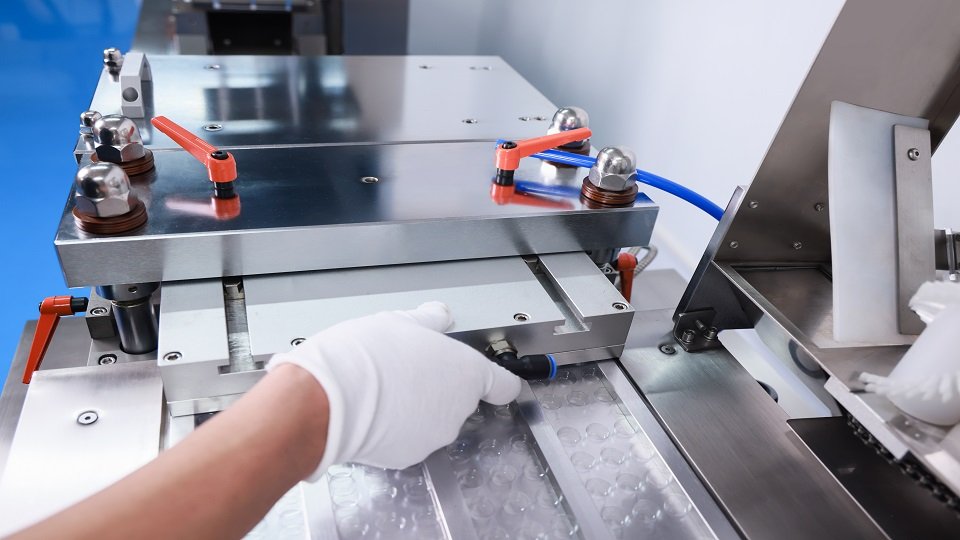
Reka bentuk slot tarik keluar mesin pembungkusan lepuh Rich Packing
Walaupun peralatan yang paling boleh dipercayai akhirnya akan memerlukan alat ganti. Namun, ramai pembeli hanya mula mempertimbangkan alat ganti selepas sesuatu komponen gagal dan pengeluaran terhenti secara tidak dijangka.
Menunggu berminggu-minggu untuk sensor, motor servo, atau komponen mekanikal tersuai boleh melambatkan penghantaran dan meningkatkan kos operasi. Oleh itu, pembeli harus menilai bukan sahaja mesin itu sendiri tetapi juga keupayaan pembekal untuk menyediakan sokongan alat ganti jangka panjang.
Soalan yang wajar ditanya termasuk sama ada komponen yang biasa digunakan ialah jenama yang diiktiraf di peringkat antarabangsa, sama ada alat ganti disimpan secara tempatan atau serantau, seberapa cepat alat ganti pengganti boleh dihantar, dan sama ada pembekal menjamin ketersediaan jangka panjang. Rantaian bekalan alat ganti yang boleh dipercayai boleh mengurangkan masa henti tidak dirancang dengan ketara dan memastikan pengeluaran stabil selama bertahun-tahun.
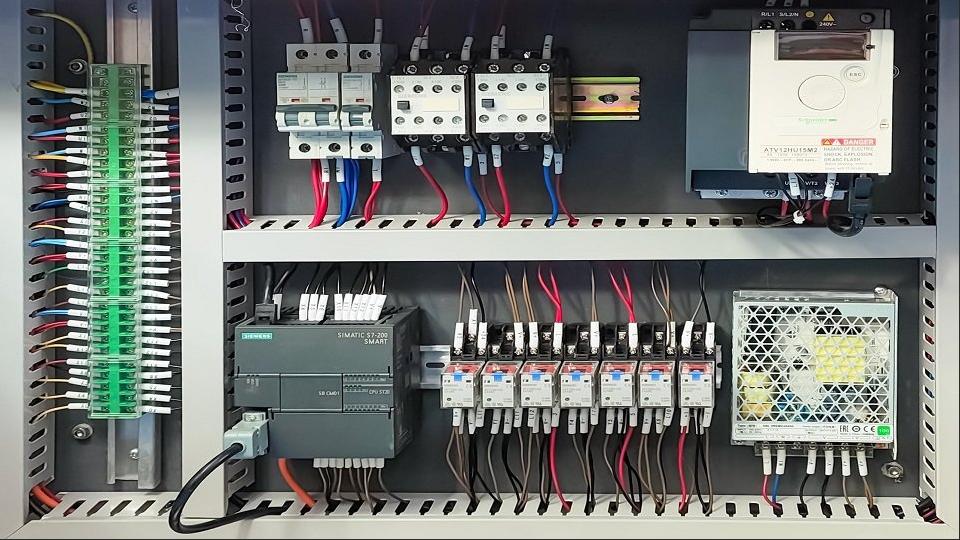
Mesin Rich Packing dengan Komponen Elektrik daripada Jenama yang Diiktiraf di Peringkat Antarabangsa
Keselamatan ialah aspek penting dalam kualiti mesin dan kebolehpercayaan operasi. Melabur dalam mesin dengan reka bentuk keselamatan menyeluruh bukan sahaja mewujudkan persekitaran kerja yang lebih selamat tetapi juga mengurangkan kos masa henti yang tidak dijangka sepanjang hayat operasi.
Mesin pembungkusan farmaseutikal yang direka dengan baik melindungi kedua-dua pengendali dan mesin itu sendiri. Ciri-ciri seperti interlock keselamatan, pelindung perlindungan, sistem henti kecemasan, perlindungan beban lampau, dan sistem penggera pintar membantu mencegah kemalangan serta meminimumkan kerosakan akibat operasi yang tidak betul.
Keselamatan penyelenggaraan juga sama penting. Mesin yang direka dengan titik akses selamat, kawasan penyelenggaraan yang tersusun dengan jelas, dan prosedur servis yang dipermudahkan mengurangkan risiko semasa pemeriksaan rutin dan pembaikan.
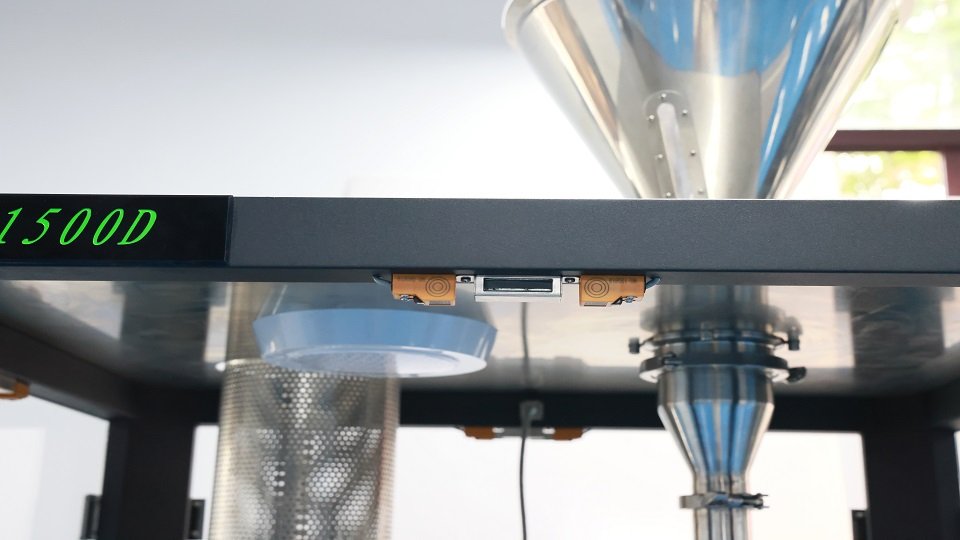
Kawalan Pintu Keselamatan Mesin Pengisian Kapsul Rich Packing
Memilih pembekal yang boleh menyediakan sokongan profesional dan kerjasama jangka panjang bukan sahaja menyediakan mesin berkualiti tinggi tetapi juga membantu mengurangkan risiko pengeluaran sepanjang hayat perkhidmatan mesin. Sebelum membuat keputusan akhir, pembeli harus menilai aspek-aspek berikut.
Risalah produk dan helaian spesifikasi menyediakan maklumat berguna, tetapi bukan keseluruhan gambaran. Daripada bergantung semata-mata pada spesifikasi teori, minta pembekal menyediakan data prestasi objektif yang dikumpulkan semasa pengeluaran sebenar. Laporan operasi berterusan,Ujian Penerimaan Kilang (FAT)rekod, kes aplikasi pelanggan, dan video pengeluaran boleh membantu mengesahkan prestasi.
Sebagai contoh, jika pembekal mendakwa bahawa mesin pembungkusan lepuh boleh menghasilkan berpuluh-puluh lepuh seminit, tanya sama ada kelajuan tersebut boleh dikekalkan semasa pengeluaran jangka panjang dan bukannya hanya dalam keadaan ujian singkat. Begitu juga, tanyakan tentang kadar penolakan dan Keberkesanan Keseluruhan Peralatan (OEE), kerana penunjuk ini lebih mencerminkan prestasi pengeluaran sebenar.
Semakin telus pembekal dengan data operasi sebenar, semakin mudah untuk menilai mesin secara objektif. Oleh itu, pembekal yang bersedia menunjukkan sebanyak mungkin maklumat kepada anda merupakan pilihan yang disyorkan.
Perkhidmatan selepas jualan yang kukuh membantu pengeluar meminimumkan masa henti dan menyelesaikan isu tidak dijangka dengan cepat. Sebelum membeli, pembeli harus memahami perkhidmatan yang disertakan selepas penghantaran dan sejauh mana cekapnya pembekal bertindak balas apabila sokongan diperlukan.
Soalan utama termasuk:
Pasukan selepas jualan yang responsif boleh mengurangkan gangguan pengeluaran dengan ketara dan memastikan mesin terus beroperasi pada prestasi optimumnya.
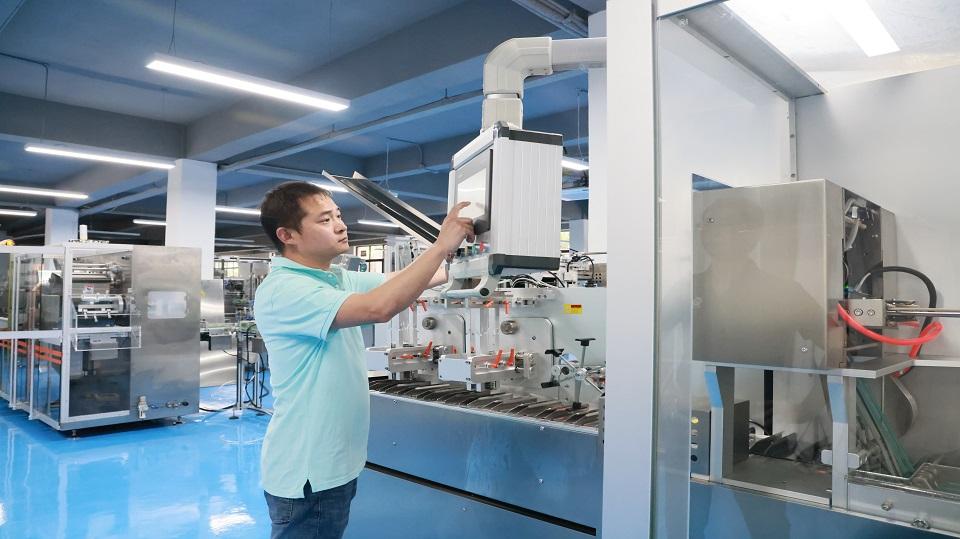
Pentauliahan Di Tapak
Apabila boleh, lawatan secara peribadi merupakan salah satu cara paling berkesan untuk menilai pembekal. Ia membolehkan pembeli melihat melangkaui katalog dan pembentangan dalam talian untuk mendapatkan gambaran langsung tentang keupayaan pembekal. Semasa lawatan, pembeli boleh memerhati persekitaran pengeluaran. Ia juga merupakan peluang yang sangat baik untuk memeriksa ketepatan pemesinan, pengurusan pengeluaran, dan sistem kawalan kualiti yang sukar dinilai dari jauh.
Selain itu, demonstrasi mesin secara langsung membolehkan pembeli menilai prestasi mesin, memerhati prosedur pembersihan dan pertukaran, serta berkomunikasi secara terus dengan jurutera tentang keperluan pengeluaran tertentu.
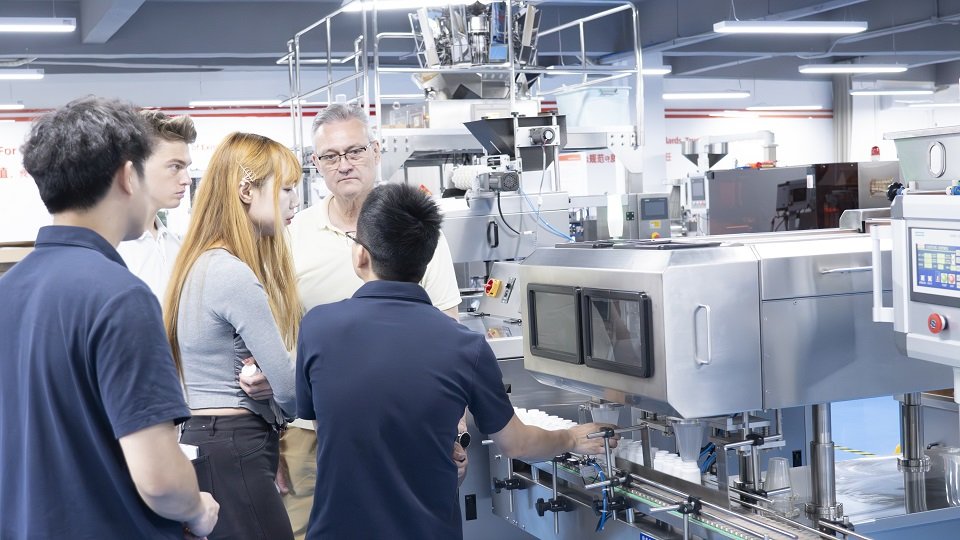
Rich Packing mengalu-alukan semua pelanggan untuk melawat kilang kami
Sebagai pembekal yang boleh dipercayai, Rich Packing sentiasa mengalu-alukan pelanggan dari seluruh dunia untuk melawat kilang kami. Demonstrasi langsung dan percubaan produk membolehkan pelanggan menilai prestasi mesin dalam keadaan operasi sebenar sebelum membuat pelaburan. Melihat mesin beroperasi dan berkomunikasi secara terus dengan pasukan kejuruteraan profesional sering memberikan keyakinan yang lebih besar berbanding hanya meneliti spesifikasi.
Membeli mesin pembungkusan farmaseutikal bukan sekadar membandingkan harga atau kelajuan pengeluaran. Kestabilan operasi jangka panjang, kemudahan pembersihan, pertukaran yang cekap, bekalan alat ganti yang boleh dipercayai, dan reka bentuk keselamatan yang menyeluruh adalah sama penting. Walaupun faktor-faktor ini sering diabaikan semasa pemilihan peralatan, ia memberi kesan langsung terhadap produktiviti dan pulangan pelaburan keseluruhan.
Akhir sekali, memilih mesin yang tepat juga bermaksud memilih pembekal yang tepat. Rich Packing, sebagai pembekal yang cemerlang, komited untuk membantu pengeluar farmaseutikal membuat keputusan pembelian yang tepat dengan menyediakan penyelesaian pembungkusan yang boleh dipercayai, disokong oleh sokongan teknikal profesional dan perkhidmatan jangka panjang. Sama ada anda melabur dalam satu mesin atau barisan pengeluaran lengkap, memilih peralatan yang memenuhi keperluan semasa dan rancangan pertumbuhan masa depan anda akan meletakkan asas yang lebih kukuh untuk pembuatan yang cekap dan mampan.
Sebelum membeli mesin pembungkusan farmaseutikal, nilai sama ada ia sepadan dengan keperluan pengeluaran, ciri produk, kapasiti pengeluaran yang diperlukan, piawaian pematuhan, dan bajet anda. Selain faktor asas ini, adalah sama penting untuk menilai kestabilan operasi jangka panjang, kemudahan pembersihan, kecekapan pertukaran, ketersediaan alat ganti, dan ciri keselamatan bagi memastikan prestasi yang boleh dipercayai sepanjang hayat mesin.
Mulakan dengan memberikan pembekal maklumat terperinci tentang produk anda, termasuk saiz, bentuk, sifat bahan, format pembungkusan, dan hasil pengeluaran yang dikehendaki. Pembekal yang boleh dipercayai harus mengesyorkan konfigurasi mesin berdasarkan aplikasi khusus anda dan bukannya menawarkan penyelesaian yang sama untuk semua keadaan.
Mesin dengan kelajuan puncak yang tinggi mungkin tidak dapat mengekalkan prestasi yang sama semasa pengeluaran jangka panjang. Operasi yang stabil di bawah keadaan berterusan atau beban penuh membantu mengurangkan masa henti, meminimumkan produk ditolak, meningkatkan Keberkesanan Keseluruhan Peralatan (OEE), dan mengurangkan kos operasi dari semasa ke semasa.
Ya, jika boleh. Lawatan kilang membolehkan anda memeriksa keupayaan pengeluaran, proses kawalan kualiti, prosedur ujian peralatan, dan piawaian pembuatan keseluruhan. Ia juga memberi anda peluang untuk melihat demonstrasi mesin secara langsung dan membincangkan keperluan pengeluaran anda secara terus dengan pasukan kejuruteraan.
Walaupun mesin berkualiti tinggi memerlukan pemasangan, latihan, penyelenggaraan, dan sokongan teknikal sekali-sekala. Pembekal dengan perkhidmatan selepas jualan profesional boleh membantu menyelesaikan masalah dengan cepat, meminimumkan gangguan pengeluaran, dan memastikan mesin beroperasi dengan cekap sepanjang hayat perkhidmatannya.

29+ years in pharmaceutical machinery, covering capsule filling, tablet pressing, blister packaging, tablet and capsule counting, cartoning, GMP production, and overseas machine service.

E-mel : manager@richpacking.cn
Building D, No. 226, Beishan Qiaotou Street, Haizhu District, Guangzhou City, Guangdong Province, China


 Rangkaian IPv6 disokong