






 Rumah
Rumah Produk
29+ years in pharmaceutical machinery, covering capsule filling, tablet pressing, blister packaging, tablet and capsule counting, cartoning, GMP production, and overseas machine service.

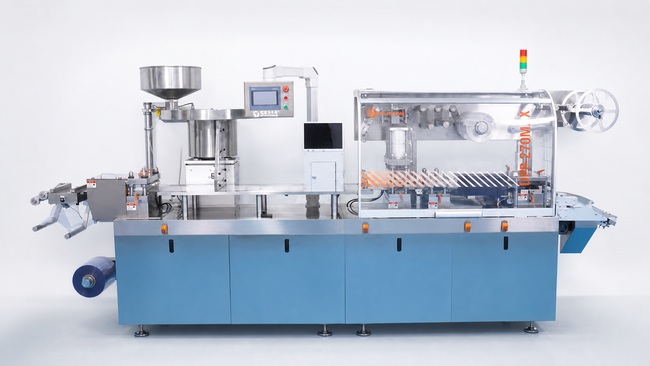
Bagi pengeluar kontrak farmaseutikal, pengeluar CDMO atau OEM, satu barisan pembungkusan lepuh mungkin perlu mengendalikan produk, saiz tablet atau kapsul, susunan rongga dan dimensi lepuh siap yang berbeza dari semasa ke semasa.
Kekerapan sebenar perubahan format bergantung pada portfolio produk setiap pengeluar, pesanan pelanggan dan saiz kelompok. Sesetengah kilang mungkin menjalankan kempen panjang untuk produk yang sama, manakala yang lain mungkin mengubah spesifikasi dengan lebih kerap. Apa yang penting ialah apa yang berlaku apabila spesifikasi seterusnya perlu dikeluarkan.
Dalam persekitaran ini, kelajuan larian yang dinilai bagimesin pembungkusan lepuhhanya menceritakan sebahagian daripada cerita. Mesin boleh berjalan dengan pantas sebaik sahaja pengeluaran bermula, tetapi jika setiap perubahan format memerlukan pembongkaran yang panjang, penjajaran manual dan ujian berulang, sejumlah besar masa pengeluaran yang tersedia masih hilang antara kelompok.
Bagi pengilang kontrak,masa pertukaranmerupakan sebahagian daripada kapasiti pengeluaran sebenar.
Oleh itu, soalan pembelian tidak boleh dihadkan kepada "Seberapa pantas mesin lepuh boleh berjalan?" Ia juga harus merangkumi: "Seberapa cepat barisan boleh disediakan untuk spesifikasi produk seterusnya?"
Menukar daripada satu spesifikasi lepuh kepada spesifikasi lepuh yang lain bukan sekadar menggantikan satu acuan. Bergantung pada produk dan susun atur lepuh, beberapa stesen kerja mungkin perlu diubah atau diselaraskan, termasuk:
Contohnya, saiz tablet atau kapsul yang berbeza mungkin memerlukan susunan rongga yang baharu, manakala saiz plat lepuh siap yang berbeza boleh menjejaskan kedua-dua pembentukan dan pemotongan perkakas. Setiap stesen tambahan menjadi sumber masa pelarasan yang berpotensi jika kedudukannya tidak boleh diulang.
Inilah sebabnya mengapa reka bentuk pertukaran lebih penting daripada bilangan skru sahaja. Persoalan sebenar ialah berapa banyak kerja penjajaran yang tinggal selepas perkakas baharu dipasang.
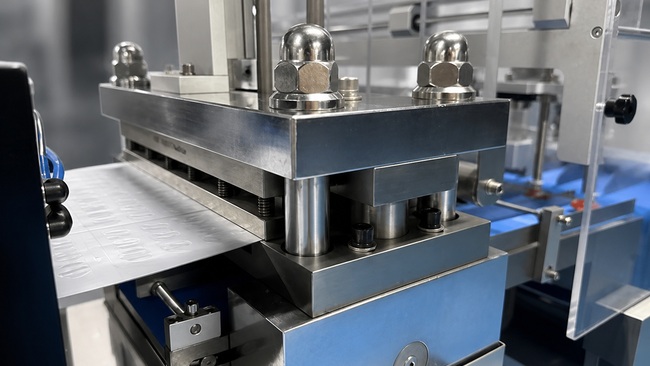
Masalah terbesar dengan pertukaran mesin lepuh tradisional bukan sekadar pengendali perlu menanggalkan lebih banyak skru atau mengangkat lebih banyak bahagian acuan. Kebanyakan proses bergantung pada pengalaman dan pengalaman juruteknik terhadap mesin tersebut.
Sebaik sahaja acuan atas dan bawah dipasang, penjajaran manual masih diperlukan. Penyimpangan kecil boleh menjejaskan kedudukan pembentukan, ketepatan pengedap atau penjajaran pemotongan. Juruteknik mungkin perlu melonggarkan perkakas, menggerakkannya sedikit, mengetatkannya semula dan menjalankan ujian lain. Ini boleh diulang beberapa kali sehingga kedudukannya boleh diterima.
Oleh kerana pelarasan ini sangat bergantung pada pertimbangan peribadi, masa yang diperlukan boleh berbeza-beza antara satu pengendali dengan pengendali yang lain.
Berdasarkan pengalaman kami, juruteknik yang berpengalaman pun mungkin memerlukan lebih daripada 1 jam. Pengendali tanpa pengalaman yang mencukupi mungkin menghabiskan setengah hari dan masih gagal menyelesaikan pelarasan dengan betul.
Bagi pengilang kontrak, ini mewujudkan risiko pengeluaran yang praktikal: kecekapan bukan sahaja bergantung pada mesin, tetapi juga pada siapa yang melakukan pertukaran pada hari itu.
Jika hanya seorang atau dua juruteknik berpengalaman yang boleh menyelesaikan penjajaran acuan dengan pasti, mereka akan menjadi kesesakan apabila pengeluaran perlu beralih kepada spesifikasi lain.
Oleh itu, perubahan tradisional boleh menjejaskan:
Matlamat sistem pertukaran yang lebih mudah bukan sekadar untuk menjadikan juruteknik yang sama bekerja lebih pantas. Ini menjadikan proses lebih konsisten dan mengurangkan pergantungan pada pengalaman juruteknik individu.
Pada model dan konfigurasi mesin pembungkusan lepuh Rich Packing yang berkenaan, stesen penukaran acuan utama menggunakan struktur modular dengan kedudukan tetap.
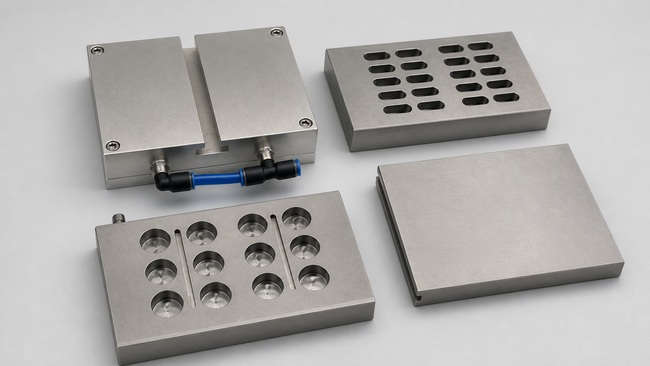
Daripada meminta juruteknik memasang komponen acuan atas dan bawah secara berasingan dan kemudian mencari kedudukan operasi yang betul secara manual, set acuan boleh dikendalikan sebagai modul lengkap. Struktur kedudukan tetap membimbing modul kembali ke lokasi yang dimaksudkan.
Proses perubahan asas menjadi:
Bagi model dan konfigurasi yang berkenaan, pengendali terlatih boleh menyelesaikan penukaran acuan mesin yang lengkap dalam masa kira-kira 15 minit, bergantung pada format lepuh dan konfigurasi mesin.
Perkara utama bukan sekadar mencapai pertukaran selama 15 minit. Penambahbaikan yang lebih besar ialah pengendali tidak lagi perlu bergantung sepenuhnya pada penjajaran manual berulang atau pengalaman peribadi untuk "mencari" kedudukan acuan yang betul selepas setiap penggantian.
Objektifnya adalah untuk mengubah perubahan daripada tugasan yang bergantung kepada pengalaman kepada prosedur operasi yang lebih piawai.
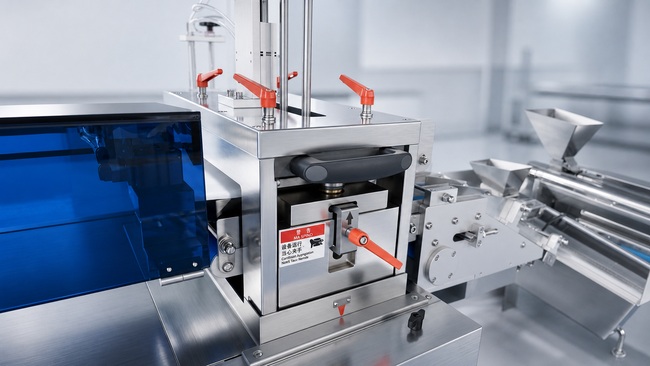
Stesen pemotongan merupakan salah satu kawasan di mana pertukaran acuan tradisional boleh menjadi sangat menyusahkan. Acuan pemotongan atas dan bawah mesti berfungsi pada kedudukan relatif yang betul.
Jika penjajaran tidak betul, plat lepuh yang telah siap mungkin mempunyai tepi yang tidak rata, dimensi yang salah atau potongan yang tidak lengkap. Pada persediaan tradisional, pengendali mungkin perlu melonggarkan acuan pemotong, meletakkannya semula, mengetatkannya semula dan melakukan ujian lain beberapa kali sebelum mencapai kedudukan pemotongan yang boleh diterima.
Rich Packing menggunakan stesen pemotongan modular gaya laci pada konfigurasi yang berkenaan. Acuan pemotong lengkap boleh ditarik keluar sebagai satu modul. Apabila format lepuh berubah, operator akan mengeluarkan modul semasa, memasukkan yang baharu ke dalam slot kedudukan tetap dan menguncinya di tempatnya.
Ini mengurangkan kedudukan manual berulang antara komponen pemotongan atas dan bawah. Bagi pengeluar yang perlu menukar format mengikut struktur pesanan mereka sendiri, manfaat praktikalnya ialah kurang masa yang dihabiskan untuk mencari kedudukan pemotongan yang betul sebelum kelompok baharu boleh dimulakan.
Ia juga membantu mengurangkan percubaan yang tidak perlu yang hanya dilakukan untuk membetulkan penjajaran pemotongan, yang seterusnya dapat mengurangkan penggunaan bahan pembungkusan semasa persediaan.
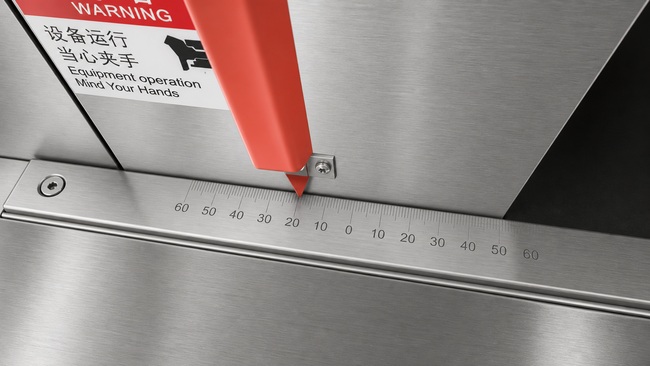
Prinsip yang sama terpakai pada stesen pembentukan. Pada mesin lepuh tradisional, acuan pembentukan atas dan bawah biasanya dipasang secara berasingan, diikuti dengan pelarasan manual untuk memastikan penjajaran rongga yang tepat.
Dengan stesen pembentukan modular, set acuan lengkap dipasang sebagai satu unit. Operator hanya perlu memasukkan modul ke dalam slot kedudukan tetapnya dan menguncinya di tempatnya, sekali gus mengurangkan kerja pelarasan dan menjadikan pertukaran lebih konsisten.
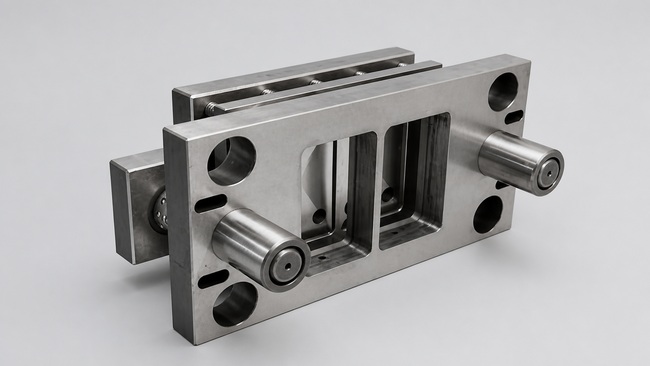
Penggantian acuan yang mudah hanya berguna jika perkakas juga dapat mengekalkan prestasi yang stabil sepanjang pengeluaran jangka panjang.
Rich Packing menggunakan keluli alat DC53 Jepun untuk acuan pemotong. Bahan ini memberikan kekerasan yang tinggi, rintangan haus dan kestabilan dimensi. Dengan operasi dan penyelenggaraan yang betul, acuan pemotong boleh kekal digunakan selama lebih daripada 15 tahun. Bagi pengilang kontrak yang menggunakan satu barisan untuk produk pelanggan yang berbeza, perkakas yang tahan lama dapat mengurangkan sumber gangguan yang lain. Acuan pemotong yang kerap digunakan mesti terus menghasilkan dimensi plat siap yang konsisten dan tepi yang bersih merentasi pengeluaran berulang.
Permukaan pemotongan juga membantu menghasilkan tepi lepuh yang licin, mengurangkan tepi kasar atau tajam semasa pemeriksaan, pembungkusan dan pengendalian.
Secara praktikal, kualiti acuan pemotong mempengaruhi ketepatan pemotongan, rupa lepuh siap, jangka hayat perkakas, kekerapan penyelenggaraan dan konsistensi pengeluaran.
|
Perbandingan |
Bilah Pemotong DC53 |
Bilah Pemotong Konvensional |
|
Rintangan Haus |
★★★★★ Cemerlang |
★★★☆☆ Standard |
|
Ketangguhan |
Kekuatan tinggi dengan rintangan yang kuat terhadap keretakan |
Lebih mudah terdedah kepada haus tepi atau keretakan di bawah penggunaan berterusan |
|
Pengekalan Tepi |
Mengekalkan kelebihan tajam untuk pengeluaran jangka panjang |
Memerlukan pengasahan atau penggantian yang lebih kerap |
|
Kestabilan Pemotongan |
Prestasi pemotongan yang konsisten sepanjang kitaran pengeluaran yang dilanjutkan |
Prestasi secara beransur-ansur merosot apabila bilah haus |
|
Kekerapan Penyelenggaraan |
Rendah |
Agak tinggi |
|
Typical Service Life |
Up to 12+ years under normal operating and maintenance conditions |
Heavy-duty use: replacement every 10–12 months |
|
Downtime |
Fewer blade changes and less maintenance downtime |
More frequent maintenance may interrupt production |
|
Long-Term Value |
Higher durability and lower long-term replacement cost |
Lower initial cost but higher replacement frequency |
“Reduced downtime” is correct, but it is too general to explain the full value of faster mold changeover for contract manufacturing.
A traditional changeover can take an experienced technician more than one hour, while an operator without enough experience may spend half a day and still struggle with alignment. Reducing this dependence frees experienced technicians from repeatedly handling routine format changes.
During mold adjustment, the machine is not producing saleableblister packs. A shorter and more predictable changeover therefore increases the amount of available production time between batches.
Manual alignment normally requires trial runs. Every additional test can consume PVC, aluminum foil and, depending on the setup procedure, product. More accurate repeat positioning helps reduce unnecessary adjustment runs.
If changeover time varies from just over one hour to half a day depending on technician experience, production managers have difficulty building a reliable schedule. A standardized process makes the interval between two specifications easier to estimate.
For contract manufacturers, predictability can be just as valuable as speed.
For a factory producing one blister format continuously, changeover design may not be the first purchasing consideration. For a CDMO, OEM manufacturer or pharmaceutical contract manufacturer, the situation is different.
Before purchasing a blister packaging machine, do not only ask for maximum production speed. Also ask:
These questions often reveal more about suitability for contract manufacturing than maximum cycle speed alone. For multi-product production, availability, repeatability and changeover time all contribute to actual usable capacity.
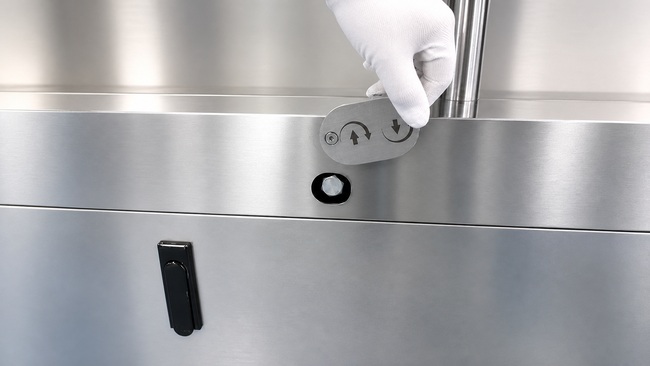
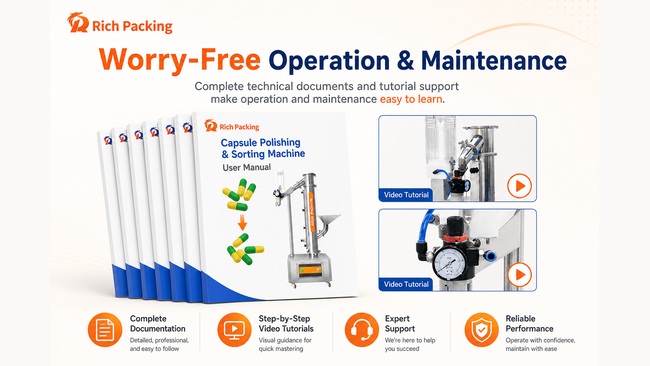
Even when the mechanical structure is designed to simplify changeover, operators still need to understand the correct installation sequence, locking procedure and parameter settings.
Rich Packing provides supporting technical documents, operating manuals and mold installation tutorials with the machine. Remote video guidance is also available for mold installation, parameter adjustment, machine operation and troubleshooting.
When required, engineers can provide on-site installation, commissioning and operator training.
For contract manufacturers, this support matters because new products and new mold sets may be introduced after the original machine installation. The objective is therefore not only to complete the first setup, but also to help operators manage future format changes reliably.
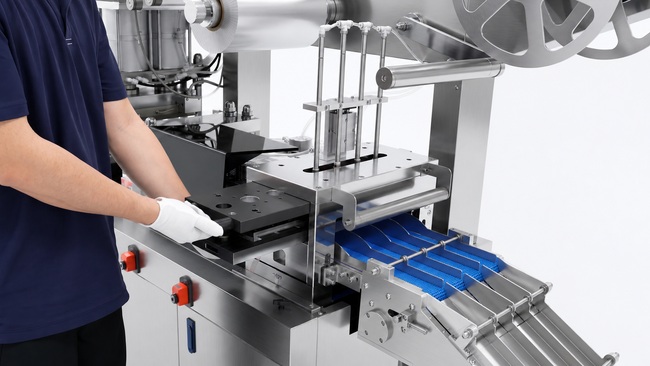
For a pharmaceutical contract manufacturer, CDMO or OEM plant, mold changeover is not a minor maintenance detail. It directly affects how efficiently the production line can move from one product specification to the next whenever customer demand requires a change.
Traditional mold changeover can be highly dependent on technician experience. Even an experienced technician may need more than one hour, while an operator without sufficient experience may spend half a day and still struggle to complete the adjustment correctly. This creates downtime, setup waste and uncertainty in production planning.
On applicable Rich Packing blister packaging machine configurations, modular mold structures, drawer-style cutting modules and fixed positioning are designed to reduce repeated manual alignment. A trained operator can complete the complete mold changeover in approximately 15 minutes, depending on the specific blister format and machine configuration.
Combined with Japanese DC53 cutting dies and technical support for operator training, the design helps make changeover more repeatable and less dependent on individual technician feel.
For contract manufacturers, the right blister packaging machine is not only the one that runs fast. It is the one that can be prepared for the next specification with less downtime, less adjustment and less uncertainty.
Masa bergantung pada struktur mesin, format lepuh dan pengalaman pengendali. Dengan sistem tradisional, juruteknik yang berpengalaman mungkin memerlukan lebih daripada satu jam, manakala pengendali yang tidak berpengalaman mungkin menghabiskan setengah hari dan masih bergelut dengan pelarasan. Untuk model dan konfigurasi modular Rich Packing yang berkenaan, pengendali yang terlatih boleh menyelesaikan penukaran acuan lengkap dalam masa kira-kira 15 minit.
Pengilang kontrak, CDMO dan pengeluar farmaseutikal OEM mungkin perlu mengendalikan spesifikasi pelanggan yang berbeza pada barisan pengeluaran yang sama. Perubahan yang lebih pantas dan berulang dapat mengurangkan masa henti antara kelompok dan menjadikan perancangan pengeluaran kurang bergantung pada pengalaman juruteknik individu.
Bergantung pada produk dan susun atur lepuh, pertukaran mungkin melibatkan stesen pembentukan, sistem pemakanan, stesen pengedap haba, stesen pengekodan kelompok dan stesen pemotongan.
Ya, apabila mesin dilengkapi dengan set acuan yang sepadan dan produk tersebut berada dalam julat mesin yang berkenaan. Saiz tablet atau kapsul yang berbeza, susunan rongga dan dimensi lepuh siap mungkin memerlukan perkakas yang berbeza.
Penjajaran manual tradisional selalunya banyak bergantung pada pengalaman juruteknik. Struktur modular dengan kedudukan tetap direka bentuk untuk mengurangkan kebergantungan ini. Selepas latihan yang betul, pengendali tetap boleh menyelesaikan banyak langkah pertukaran dengan lebih konsisten pada konfigurasi yang berkenaan.
Penjajaran tradisional mungkin memerlukan percubaan berulang sebelum kedudukan membentuk, menutup dan memotong adalah betul. Penentuan kedudukan yang lebih berulang dapat mengurangkan kitaran pelarasan yang tidak perlu, membantu mengurangkan PVC, kerajang aluminium dan produk yang digunakan semasa persediaan.
Selain kelajuan larian, periksa prosedur pertukaran sebenar, kaedah kedudukan acuan, masa penggantian perkakas, keperluan pengendali, bilangan langkah pelarasan, jangkaan pembaziran persediaan dan sokongan teknikal yang tersedia selepas penghantaran.

29+ years in pharmaceutical machinery, covering capsule filling, tablet pressing, blister packaging, tablet and capsule counting, cartoning, GMP production, and overseas machine service.

E-mel : manager@richpacking.cn
Building D, No. 226, Beishan Qiaotou Street, Haizhu District, Guangzhou City, Guangdong Province, China


 Rangkaian IPv6 disokong