






 Rumah
Rumah Produk

29+ years in pharmaceutical machinery, covering capsule filling, tablet pressing, blister packaging, tablet and capsule counting, cartoning, GMP production, and overseas machine service.

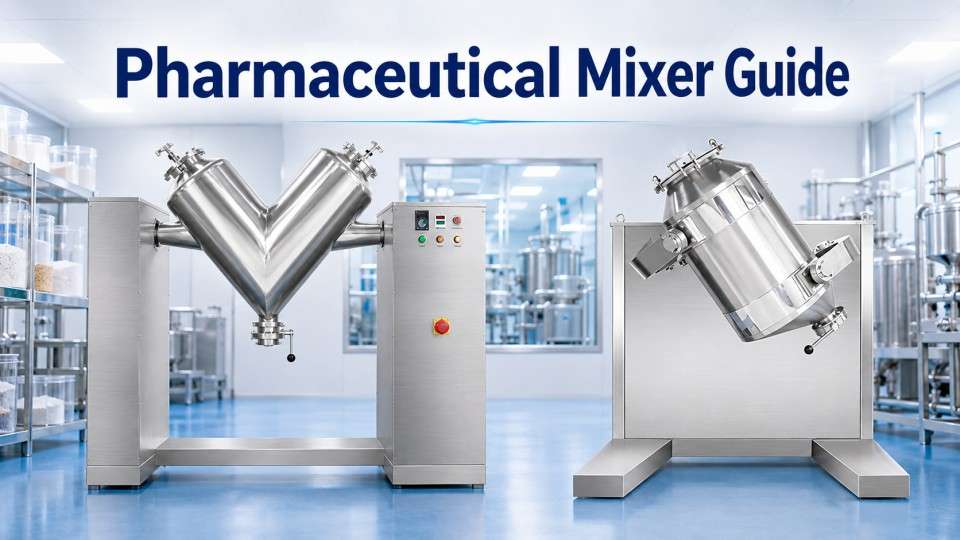
Pencampuran ialah operasi unit utama dalam pembuatan dos pepejal farmaseutikal. Serbuk, granul, bahan aktif farmaseutikal dan eksipien sering perlu digabungkan sebelum granulasi, pemampatan tablet, pengisian kapsul atau pembungkusan serbuk. Pengadun farmaseutikal menghasilkan pergerakan yang diperlukan untuk mengagihkan bahan-bahan ini melalui satu kelompok, tetapi mesin itu sendiri tidak menentukan kualiti campuran. Saiz zarah, ketumpatan pukal, kebolehaliran, urutan pemuatan, tahap pengisian, masa pencampuran dan pemindahan bahan semuanya mempengaruhi hasil akhir.
Istilah pengadun farmaseutikal dan pengisar campuran farmaseutikal sering digunakan secara bergantian. Dalam pengeluaran dos pepejal, “pengisar campuran” biasanya merujuk kepada peralatan untuk serbuk dan granul kering, manakala “pengadun” juga boleh menerangkan peralatan pencampuran basah dan granulasi. Panduan ini memberi tumpuan kepada pengadun yang digunakan untuk serbuk dan granul farmaseutikal, dengan perhatian khusus kepada pengadun jenis V dan pengadun 3D.
Pengadun farmaseutikal menggabungkan dua atau lebih bahan menjadi campuran yang sesuai untuk peringkat pembuatan seterusnya. Dalam pengeluaran dos pepejal, kelompok mungkin mengandungi API, pengisi, pengikat, bahan penghancur, bahan pelicin aliran, pelincir, granul kering atau pelet bersalut.
Mesin tersebut mesti menghasilkan corak pergerakan zarah yang sesuai tanpa kerosakan, haba, lekatan atau pengasingan yang tidak diperlukan. Titik akhir bergantung pada formulasi dan proses, bukannya masa pencampuran sejagat atau angka keseragaman yang diiklankan. ICH Q8(R2) menghubungkan pemahaman formulasi, sifat bahan, parameter proses dan kawalan pembuatan, menyokong prinsip bahawa tiada satu tetapan pengadun boleh menggantikan pemahaman proses.
Kebanyakan mesin menggabungkan lebih daripada satu mekanisme. Sebuah pengadun jenis V farmaseutikalterutamanya bergantung pada penggelekan dan resapan, pengisar campuran reben menghasilkan perolakan yang lebih kuat, sebuah farmaseutikal pengadun 3Dmenghasilkan laluan serbuk pelbagai arah, dan sebuah penggranul pengadun ricihan tinggi menggunakan pendesak dan pemotong semasa granulasi basah.
Daya yang lebih besar tidak semestinya lebih baik. Penggelekan lembut melindungi granul rapuh, manakala serbuk kohesif mungkin memerlukan pergerakan yang lebih aktif. Ricihan yang lebih kuat boleh menyokong pembentukan jisim basah tetapi juga boleh mengubah struktur zarah atau meningkatkan haba.
Pengadun farmaseutikal yang dipilih mempengaruhi masa pemprosesan, pelepasan, pembersihan, pemindahan dan kebolehulangan kelompok. Ia juga mempengaruhi tingkah laku campuran apabila disalurkan ke mesin penekan tablet, mesin pengisian kapsul, penggranul atau mesin pengisian serbuk.
Mesin yang sesuai masih boleh menghasilkan campuran yang tidak memuaskan apabila perbezaan saiz zarah atau ketumpatan terlalu besar, urutan pemuatan tidak sesuai, tahap pengisian berada di luar julat praktikal, atau bahan berpisah selepas pelepasan. Penyelidikan mengenai pencampuran farmaseutikal menunjukkan bahawa kehomogenan bergantung pada reka bentuk peralatan, kepekatan API, urutan pengecasan, tahap pengisian, masa, kelajuan, skala dan sifat serbuk seperti saiz, bentuk, ketumpatan dan kekohesifan.
Reka bentuk pengadun yang berbeza menghasilkan pergerakan bahan yang berbeza. Perbandingan berikut memberi tumpuan kepada peralatan yang biasa digunakan untuk serbuk, granul dan pemprosesan dos pepejal.
|
Jenis pengadun |
Tindakan utama |
Bahan yang sesuai |
Kegunaan biasa |
Had utama |
|
Pengadun jenis V |
Penggelekan satu paksi yang lembut |
Serbuk dan granul yang mudah mengalir |
Pencampuran awal dan pencampuran kering akhir |
Tindakan terhad terhadap serbuk yang sangat kohesif |
|
Pengadun 3D |
Pergerakan bekas berbilang arah |
Serbuk dan granul yang memerlukan pergerakan lebih meluas |
Pengadunan kering lembut |
Mekanisme pemacu yang lebih kompleks |
|
Pengisar kon berganda |
Penggulingan lembut |
Serbuk kering dan granul rapuh |
Pengadunan kelompok umum |
Kurang berkesan untuk campuran kohesif yang sukar |
|
Pengisar tong atau IBC |
Penggulingan bekas |
Kelompok kering sederhana dan besar |
Pengadunan dengan langkah pemindahan yang lebih sedikit |
Memerlukan tong dan peralatan pengendalian yang serasi |
|
Pengisar reben |
Pencampuran perolakan paksa |
Serbuk yang memerlukan pergerakan lebih aktif |
Kelompok lebih besar dan julat bahan yang lebih luas |
Lebih banyak permukaan dalaman untuk dibersihkan |
|
Pengadun granulasi ricih tinggi |
Tindakan pendesak dan pencincang |
Serbuk dengan cecair pengikat |
Pencampuran basah dan granulasi |
Ricih lebih tinggi dan kemungkinan penjanaan haba |
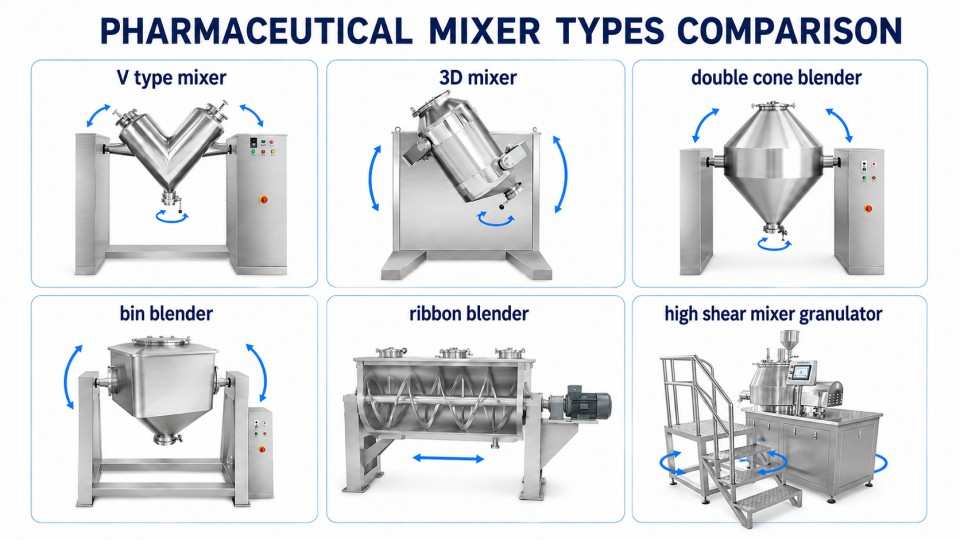
Pengadun jenis V, pengadun 3D, pengisar kon berganda, dan pengisar tong semuanya menggerakkan bahan dengan memutarkan atau mengubah kedudukan bekas. Ia biasanya memberikan ricih yang agak rendah dan sesuai untuk serbuk kering atau granul yang boleh bergerak melalui lapisan serbuk tanpa pengadukan mekanikal yang kuat.
Pengadun jenis V membahagikan kelompok antara dua lengan yang bersambung dan menggabungkannya semula berhampiran bahagian bawah, menjadikannya praktikal untuk serbuk mengalir bebas, granul kering, dan rawatan lembut.
Pengadun 3D menggerakkan bekas dalam beberapa arah, menghasilkan laluan pergerakan yang lebih kompleks sambil mengekalkan ricih rendah. Ia berguna apabila ujian menunjukkan bahawa penggulingan paksi tunggal tidak mengagihkan semula bahan dengan secukupnya.
Pengisar kon berganda menyokong pencampuran dan pelepasan lembut tetapi, seperti pengisar pengguling lain, mungkin menghadapi kesukaran dengan serbuk kohesif. Pengisar tong atau IBC menggunakan bekas pengangkutan sebagai bekas pencampuran, mengurangkan langkah pemindahan apabila sistem pengangkatan, pelepasan, dan pembersihan yang lebih luas adalah serasi.
Pengisar reben menggunakan reben heliks untuk pergerakan perolakan yang lebih kuat dan boleh sesuai untuk kelompok lebih besar atau serbuk yang memerlukan pencampuran lebih aktif, walaupun aci, pengedap, dan hujung palungnya menambah pertimbangan pembersihan.
Pengadun granulasi ricih tinggi menggunakan pendesak dan pencincang untuk mengagihkan pengikat serta membentuk granul basah. Ia bukan pengganti langsung untuk pengadunan akhir yang lembut. Penyelidikan menunjukkan bahawa ketidakseragaman boleh berlaku semasa pencampuran kering dan pengadunan basah, jadi keseluruhan proses perlu dinilai.
Rich Packing menyediakan pengadun jenis V dan pengadun 3D untuk aplikasi serbuk dan granul. Pemilihan harus bermula dengan tingkah laku bahan dan keperluan pengeluaran, bukannya menganggap mesin yang lebih kompleks sentiasa lebih baik.
|
Faktor pemilihan |
Pengadun jenis V |
Pengadun 3D |
|
Pergerakan bekas |
Putaran mengelilingi satu paksi utama |
Pergerakan berbilang arah |
|
Tahap ricih |
Rendah |
Rendah |
|
Bahan biasa |
Serbuk dan granul yang mengalir bebas |
Serbuk dan granul yang memerlukan laluan yang lebih kompleks |
|
Struktur mekanikal |
Agak ringkas |
Lebih kompleks |
|
Penilaian pembersihan |
Geometri bekas yang ringkas boleh menyokong akses |
Bergantung pada penanggalan bekas dan reka bentuk pemacu |
|
Pelaburan |
Secara amnya lebih rendah |
Secara amnya lebih tinggi |
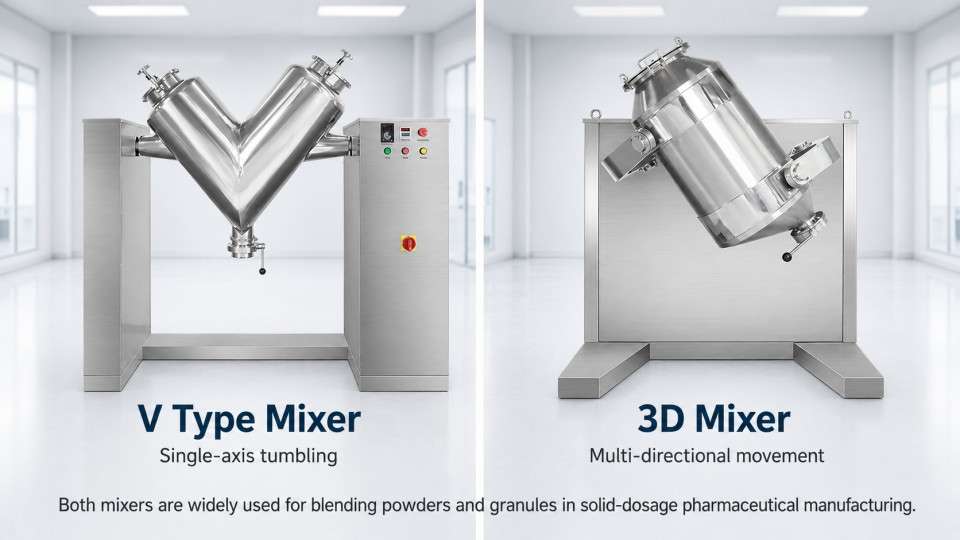
APengadun jenis V sering menjadi titik permulaan praktikal untuk formulasi yang mengalir bebas dengan saiz zarah dan julat ketumpatan yang boleh dikawal. Pengadun 3D menjadi lebih relevan apabila pergerakan pelbagai arah menghasilkan pengagihan semula yang lebih baik dalam ujian bahan.
Tiada satu pun reka bentuk ini secara automatik menghapuskan pengasingan atau menjamin peratusan keseragaman tetap. Serbuk kohesif boleh kekal sukar dikendalikan dalam kedua-duanya, dan komponen dengan saiz atau ketumpatan yang sangat berbeza boleh berpisah semasa pelepasan. Oleh itu, pemilihan mesti bergantung pada prestasi bahan sebenar.
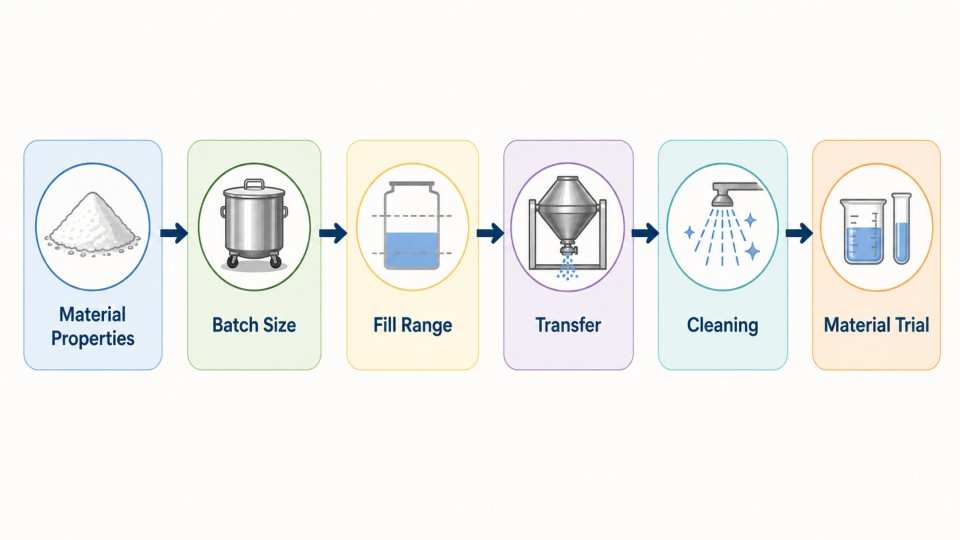
Pemilihan bermula dengan sifat-sifat formulasi:
Sifat serbuk mempengaruhi pengadunan, pemindahan, pembuatan tablet, dan pengisian kapsul. Aliran yang lemah boleh menyebabkan pergerakan tidak stabil melalui corong dan penyuap, manakala perbezaan dalam sifat zarah boleh meningkatkan risiko pengasingan.
Isipadu bekas nominal tidak sama dengan kapasiti kelompok boleh guna. Serbuk memerlukan ruang untuk bergerak, manakala pengisian yang terlalu rendah juga boleh melemahkan peredaran yang dimaksudkan. Pemilihan kelompok mesti mengambil kira kedua-dua berat dan isipadu pukal.
Julat isian berkesan perlu ditentukan untuk mesin dan formulasi tertentu. Kajian menunjukkan bahawa tahap isian yang tinggi boleh menghasilkan kawasan yang kurang bergerak, sebab itu satu peratusan muatan tidak boleh digunakan untuk setiap pengadun farmaseutikal.
Campuran boleh berpisah semasa pelepasan, penghantaran, pengisian corong, atau pengisian acuan. Oleh itu, pemilihan perlu mempertimbangkan ketinggian jatuhan, getaran, pergerakan udara, geometri bekas, dan langkah pemindahan.
Ulasan mengenai pembuatan tablet mengenal pasti sifat zarah, aliran serbuk, geometri peralatan, dan peringkat pengendalian berturutan sebagai punca pengasingan yang saling berinteraksi.
Soalan penting termasuk sama ada permukaan yang bersentuhan dengan produk boleh dicapai, sama ada bekas atau komponen dalaman boleh ditanggalkan, tempat sisa boleh terkumpul, dan sama ada pembersihan kering, pembersihan basah, atau susunan CIP adalah sesuai.
Gred keluli tahan karat, kemasan permukaan, bahagian boleh tanggal, dan peranti semburan boleh menyokong reka bentuk kebersihan, tetapi tiada satu pun menjadikan pengadun secara automatik mematuhi GMP. Panduan pengesahan proses FDA menekankan bukti saintifik dan kawalan kitar hayat, manakala ICH Q9(R1) mengesyorkan keputusan berasaskan risiko yang berkadar dengan ketidakpastian dan kepentingan.
Ujian bahan yang berguna perlu merangkumi:
Bahan tidak sepatutnya dinilai hanya berdasarkan penampilannya di dalam bekas. Satu kedudukan pensampelan mungkin tidak mewakili keseluruhan kelompok. Kajian pemantauan berbilang titik telah menunjukkan bahawa hanya memerhati satu lokasi pengisar boleh memberikan gambaran yang tidak tepat tentang status campuran sebenar.
 pemilihan pengadun farmaseutikal
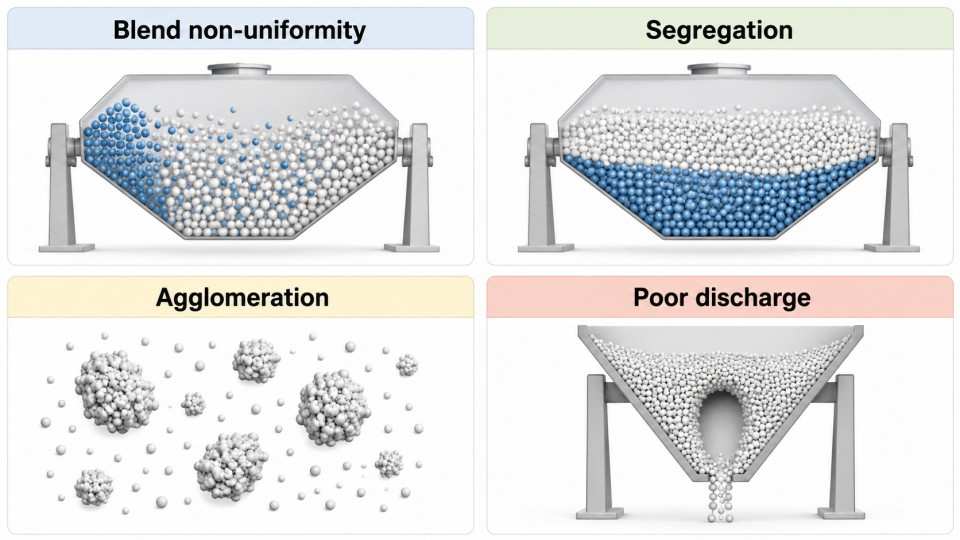
Pengagihan yang tidak sekata boleh berpunca daripada pergerakan yang tidak mencukupi, susunan pengecasan yang tidak sesuai, bahan kohesif, aras pengisian yang tidak betul, penggumpalan, atau ketidakpadanan antara serbuk dan pengadun.
Meningkatkan masa pencampuran tidak menyelesaikan setiap keadaan. Campuran boleh mencapai keseimbangan antara pencampuran dan pengasingan, selepas itu putaran tambahan memberikan sedikit peningkatan atau memperkenalkan risiko pemprosesan baharu.
Pengasingan boleh berlaku melalui pengayakan, getaran, pemflluidaan, atau jatuhan bebas. Pemindahan daripada pengadun ke tong, corong, mesin penekan tablet, atau pengisi kapsul oleh itu boleh menjadi sama penting dengan langkah pencampuran itu sendiri.
Saiz zarah, ketumpatan, kekohesifan, geometri peralatan, dan keadaan pengendalian semuanya menyumbang kepada risiko tersebut. Campuran yang diuji seragam di dalam pengadun boleh kehilangan keseragaman itu semasa pengendalian seterusnya.
Kelembapan, cas statik, zarah halus, lekatan permukaan, atau formulasi kohesif boleh menghasilkan gumpalan dan pengumpulan pada dinding. Pengadun yang berbeza boleh membantu dalam sesetengah keadaan, tetapi pengayakan, kawalan kelembapan, perubahan formulasi, atau granulasi mungkin juga diperlukan.
Pelepasan yang lemah juga boleh berpunca daripada reka bentuk saluran keluar, aliran serbuk yang tidak mencukupi, atau pemadatan bahan berhampiran injap. Masalah ini tidak sepatutnya secara automatik dikaitkan dengan masa pencampuran.
Pencampuran yang lebih lama tidak semestinya lebih selamat. Tindakan mekanikal berlebihan boleh merosakkan granul rapuh, manakala pencampuran pelincir yang berpanjangan boleh mengubah sifat tablet pada proses seterusnya.
Kajian yang melibatkan magnesium stearat telah mengaitkan pencampuran lebih lama dengan pengurangan kekuatan tegangan tablet. Oleh itu, masa pelinciran hendaklah dibangunkan dan dikawal sebagai peringkat proses khusus dan bukannya dipanjangkan tanpa bukti sokongan.
masalah pencampuran serbuk biasa
Proses dos pepejal biasa boleh merangkumi:
Pengeluaran bahan mentah
→ pengayakan atau pengisaran apabila diperlukan
→ pencampuran awal
→ granulasi apabila diperlukan
→ pengeringan dan penggredan saiz
→ pencampuran akhir
→ pemampatan tablet atau pengisian kapsul
→ pembungkusan
Tidak setiap formulasi menggunakan setiap langkah. Campuran pemampatan terus boleh bergerak ke mesin penekan tablet apabila sifat bahan dan data pembangunan menyokong laluan tersebut. Produk granulasi basah memerlukan pengagihan pengikat sebelum pengeringan dan pencampuran akhir.
Formulasi kapsul juga memerlukan aliran serbuk yang stabil dan rintangan terhadap pengasingan untuk suapan yang konsisten ke dalam mesin pengisian kapsul. Oleh itu, pengadun farmaseutikal merupakan satu bahagian dalam proses pembuatan yang saling berkaitan dan bukannya penyelesaian kualiti yang terpencil.
Tiada satu pengadun farmaseutikal yang terbaik untuk setiap serbuk atau granul. Pengadun jenis V menyediakan penggulingan yang lembut dan ekonomik untuk banyak campuran kering yang mengalir bebas. Pengadun 3D menggunakan pergerakan bekas berbilang arah apabila laluan serbuk yang lebih kompleks diperlukan. Pengisar kon berganda, pengadun tong, pengadun reben, dan pengadun granulasi ricih tinggi memenuhi keperluan bahan dan proses yang berbeza.
Pemilihan yang tepat bermula dengan sifat bahan, isipadu kelompok, julat pengisian, suapan, pelepasan, pemindahan, pembersihan, dan pemprosesan seterusnya. Percubaan bahan sebenar kemudiannya perlu mengesahkan bahawa proses lengkap—bukan hanya pengadun—boleh memberikan prestasi yang boleh diulang.
Istilah ini sering bertindih. “Blender” biasanya merujuk kepada peralatan untuk serbuk kering dan granul, manakala “mixer” mempunyai maksud yang lebih luas dan boleh merangkumi peralatan pengadunan kering, pencampuran basah, dan granulasi.
Tiada reka bentuk yang terbaik untuk setiap serbuk kering. Bahan yang mudah mengalir biasanya sesuai dengan pengadun putar, manakala serbuk yang kohesif mungkin memerlukan tindakan perolakan yang lebih kuat, perubahan formulasi, atau granulasi.
Pengadun jenis V berputar terutamanya mengelilingi satu paksi dan berulang kali membahagi serta menggabungkan semula lapisan serbuk. Pengadun 3D menggerakkan bekas dalam beberapa arah, menghasilkan laluan bahan yang lebih kompleks.
Julat pengisian yang betul bergantung pada geometri bekas, ketumpatan pukal serbuk, tingkah laku aliran, dan julat operasi yang diuji oleh pengilang. Peratusan sejagat tidak sepatutnya digunakan untuk setiap pengadun dan formulasi.
Masa pencampuran mesti ditentukan melalui pembangunan proses dan pensampelan yang mewakili. Titik akhir bergantung pada formulasi, mesin, kelajuan, tahap pengisian, urutan pengecasan, serta risiko pengasingan atau pelinciran berlebihan.

29+ years in pharmaceutical machinery, covering capsule filling, tablet pressing, blister packaging, tablet and capsule counting, cartoning, GMP production, and overseas machine service.

E-mel : manager@richpacking.cn
Building D, No. 226, Beishan Qiaotou Street, Haizhu District, Guangzhou City, Guangdong Province, China


 Rangkaian IPv6 disokong